
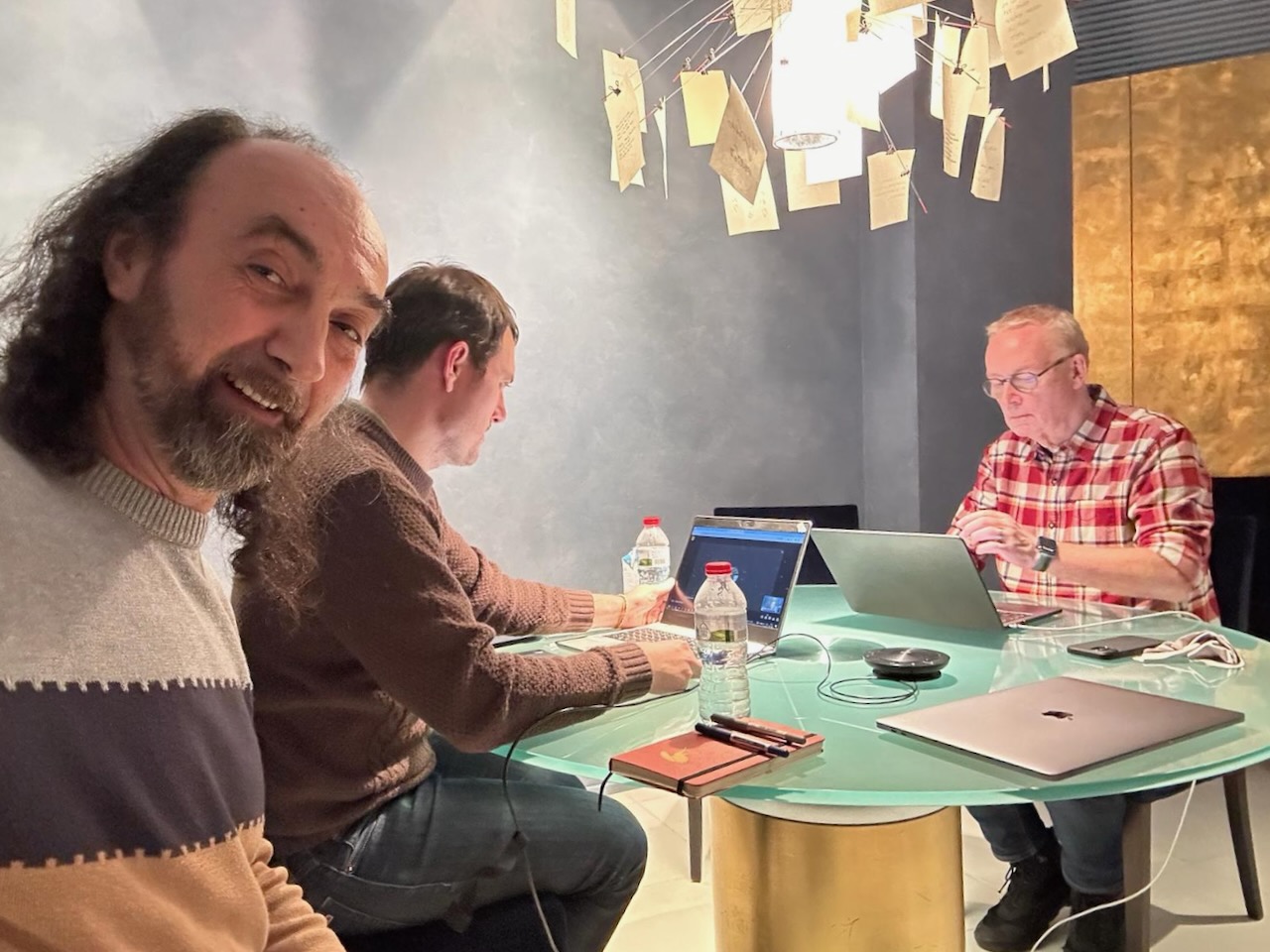
We spend two days meeting at the theatre, and share dinner in the evenings. It’s my first work since last summer and it is a joy. This project we’re planning might come to nothing but the time together is its own reward. Whatever the outcome, imagining it is a commitment to an idea of art in social life, to interdependence: to one another. At a time of fallacious, engineered divisions, caring itself can be an act of resistance. Taking care of thoughts, words and actions, taking care of one another – I don’t know a better way to navigate uncertainty.
All week, some words of Roberto S. Goizueta have lingered in my mind:
As a society, we are happy to help and serve the poor, as long as we don’t have to walk with them where they walk, that is, as long as we can minister to them from our safe enclosures. The poor can then remain passive objects of our actions, rather than friends, compañeros and compañeras, with whom we interact.
Paul Farmer, ‘Repair the World‘, UCP, 2013, p. 240
I’ve been thinking about the place of friendship in my work for a while. I wrote about it here last year, and I feel its moral imperative more than ever now. I was preoccupied by its risk then, and the need for honesty. That still seems true, but I’m beginning to see friendship as an expression of what I’ve called ‘a selfless art’.
This is a trustworthy and durable friendship, unselfish and creative, healing and empowering. And ordinary – in my life and in those of people I know and work with. It really isn’t hard to nurture and it strengthens with time and shared experience. It is, quite literally, within everyone’s gift. And so, by extension, is a selfless kind of co-creation.
 François Matarasso