Irish National Opera, Ireland

Irish National Opera (INO) is the youngest of the organisations co-creating operas in the Traction project. Founded in 2018, it is an opera producer with no theatre building of its own, which has allowed it to develop a very diverse range of work. During the pandemic, INO’s small team responded creatively to lengthy lockdowns and travel restrictions. Among other initiatives, it commissioned and produced new five-minute opera films under the title 20 Shots of Opera, that showcased young artists and digital technology’s potential for the art form. The Traction opera was even more experimental: the world’s first opera for Virtual Reality (VR) co-created with communities.
The original proposal had been to involve three very different communities in distinct aspects of the opera. School students would work on composition with Finola Merivale, supported by Music Generation in Offaly, in the rural heart of Ireland; the narrative would be the focus of people living in Inis Meáin, one of the Aran Islands in the Gaeltacht, or Irish-speaking west of Ireland; finally, adults living in Tallaght, on the edge of Dublin, would contribute to the visual design of the Virtual Reality opera.
These plans were thrown into disarray by the pandemic, and time was lost during the first year organising workshops that had to be cancelled as restrictions were lifted and then reintroduced. It was finally decided to begin the process by working online, through a series of workshops focusing on music, design and narrative, but open to everyone who had expressed an interest in the project. In particular, this drew in young people from different parts of Ireland, as it became clear that Music Generation was no longer in a position to support the activity.

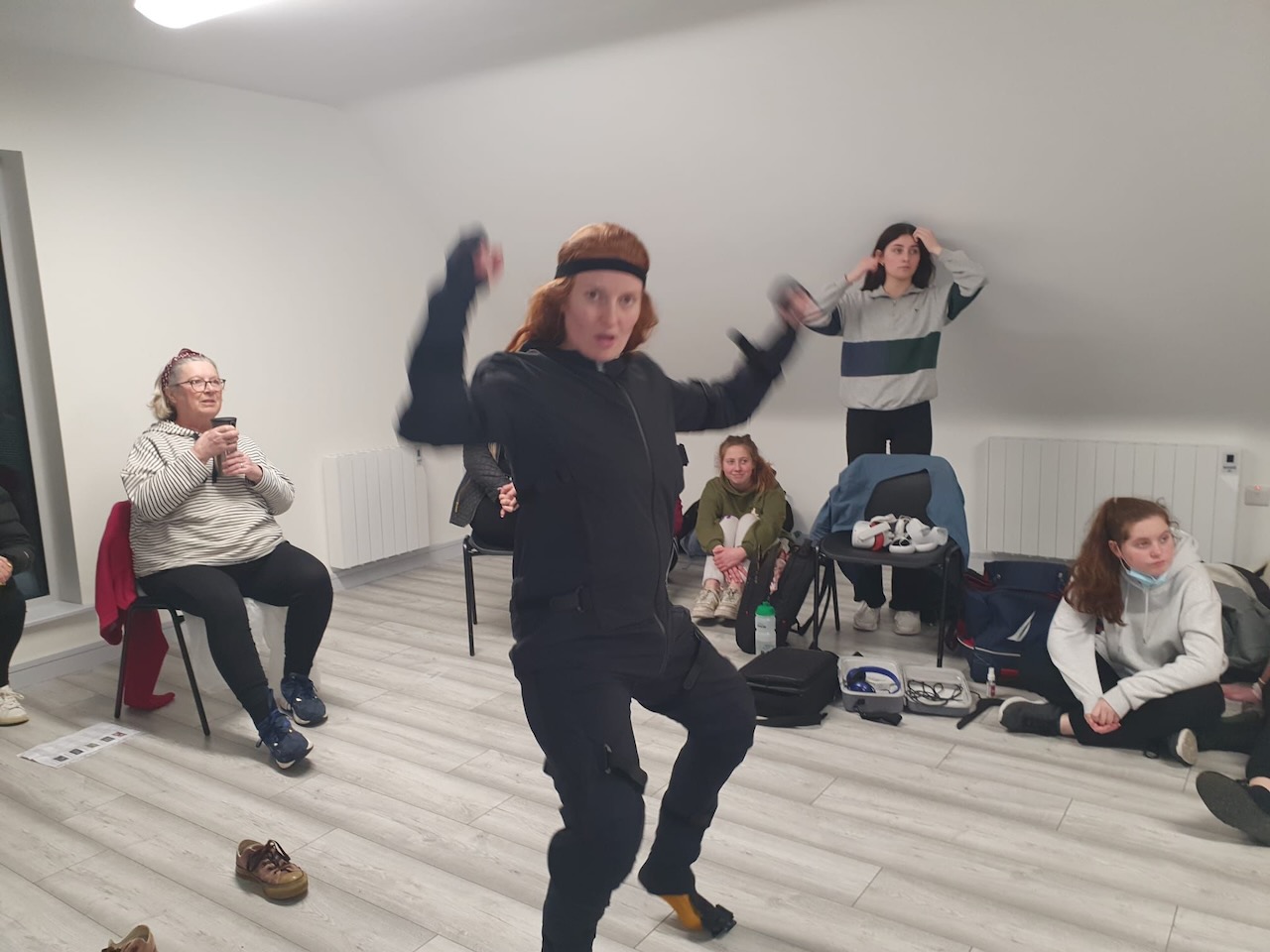
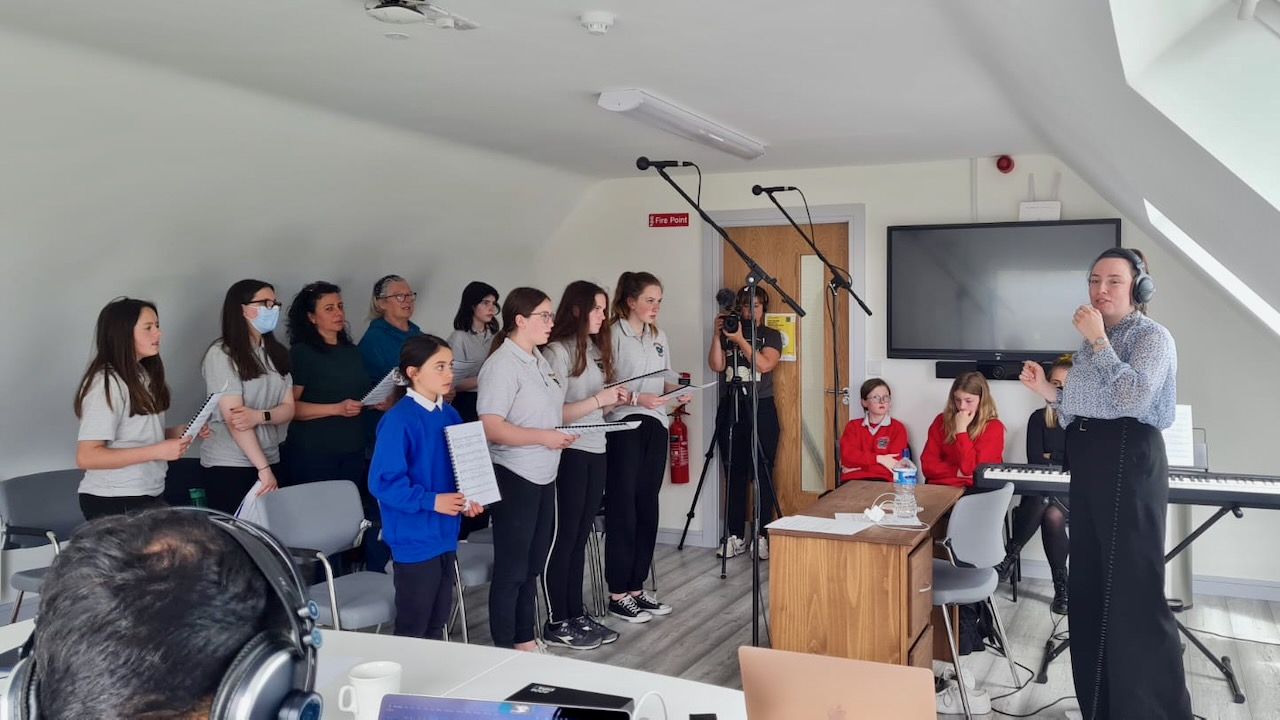
Again, the Co-creation Space proved valuable in enabling people who were able to meet only online to share visual material, sound recordings and other media and comment on work in progress. The second part of the project began in August 2021, with the first face to face workshop in Dublin, albeit still under controlled health conditions. For the first time people from different parts of Ireland who had met only online if at all were able to begin exploring ideas together and experiencing the potential of VR headsets.
The two day workshop was very successful and it was followed by further face-to-face activities in the subsequent months. Eventually, the non-professional artists were involved not only in developing musical and visual ideas, but also in shaping a narrative that drew on Irish myth and folk tales to create a new story about environmental catastrophe and renewal. They also took part in performing the music and choral singing as well as movements in VR through motion capture suits.


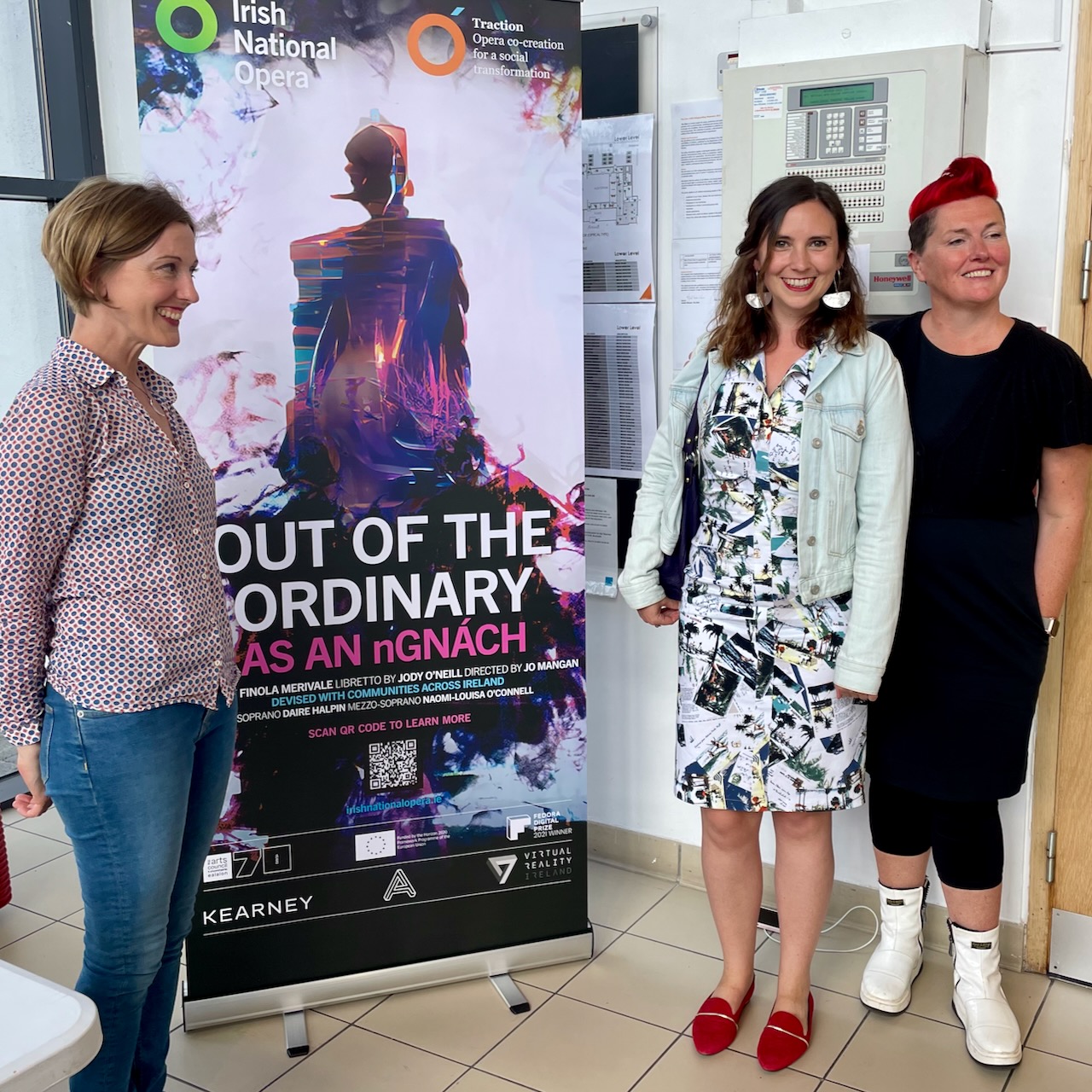
As An nGnách / Out of the Ordinary is a 20 minute VR opera, sung in English and Irish, and experienced by audiences through a headset. Groups of six are introduced to the experience by a host, who is on hand throughout in case of difficulties. The experience itself is solitary, and sometimes disorienting, but visually and musically intense. The viewer, for want of a better word, finds herself on the deck of a ship carrying Nalva and her people away from a devastated homeland. Daol, an ambiguous spirit released by Nalva’s people from the earth is following them and seems to cause a storm that wrecks the ship, plunging everyone beneath the waves and eventually into a new world where life might flourish again. The opera has two possible endings, one hopeful and the other not. Whether the viewer experiences one or the other is defined by what they have been drawn towards in the VR world.
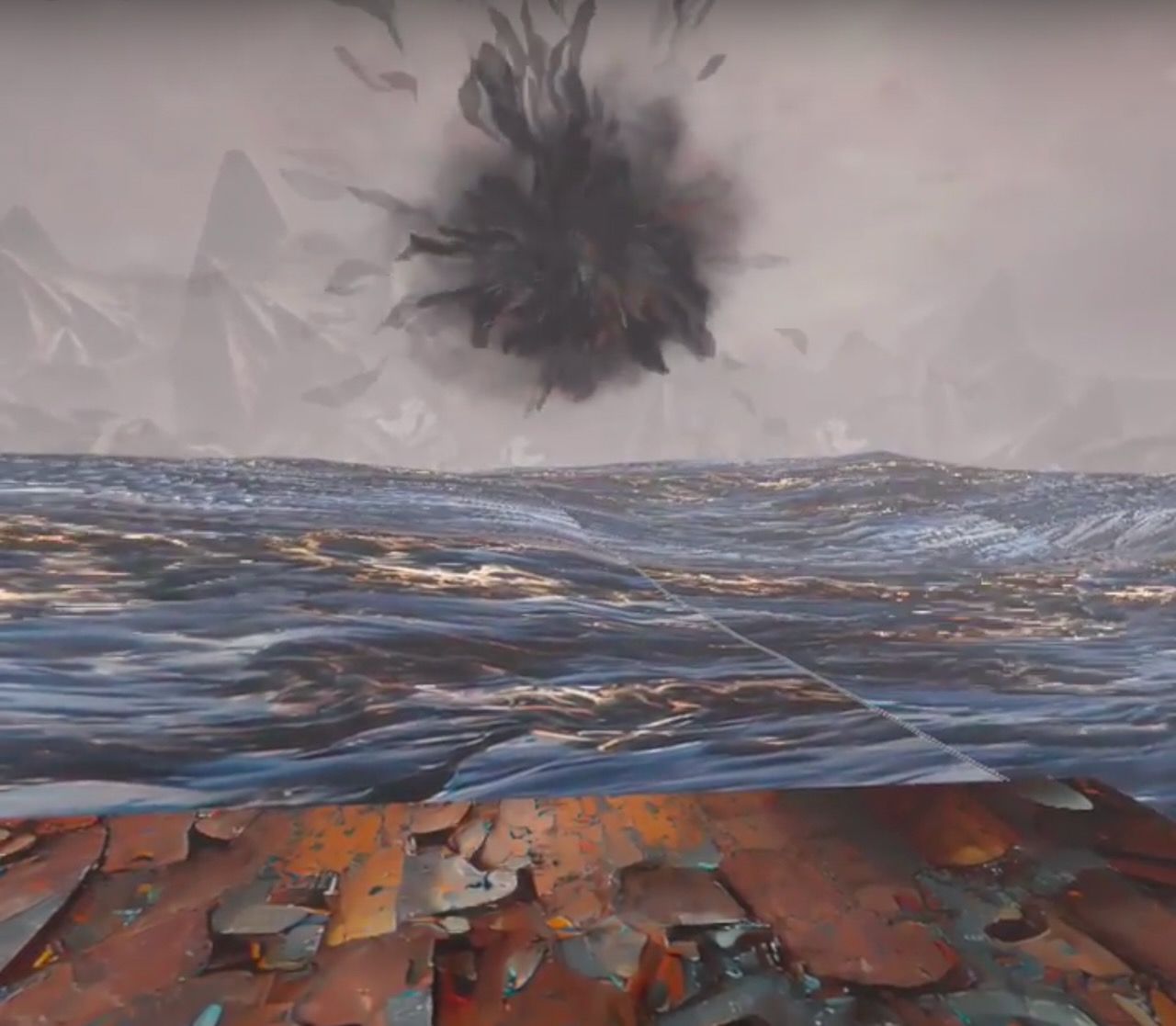

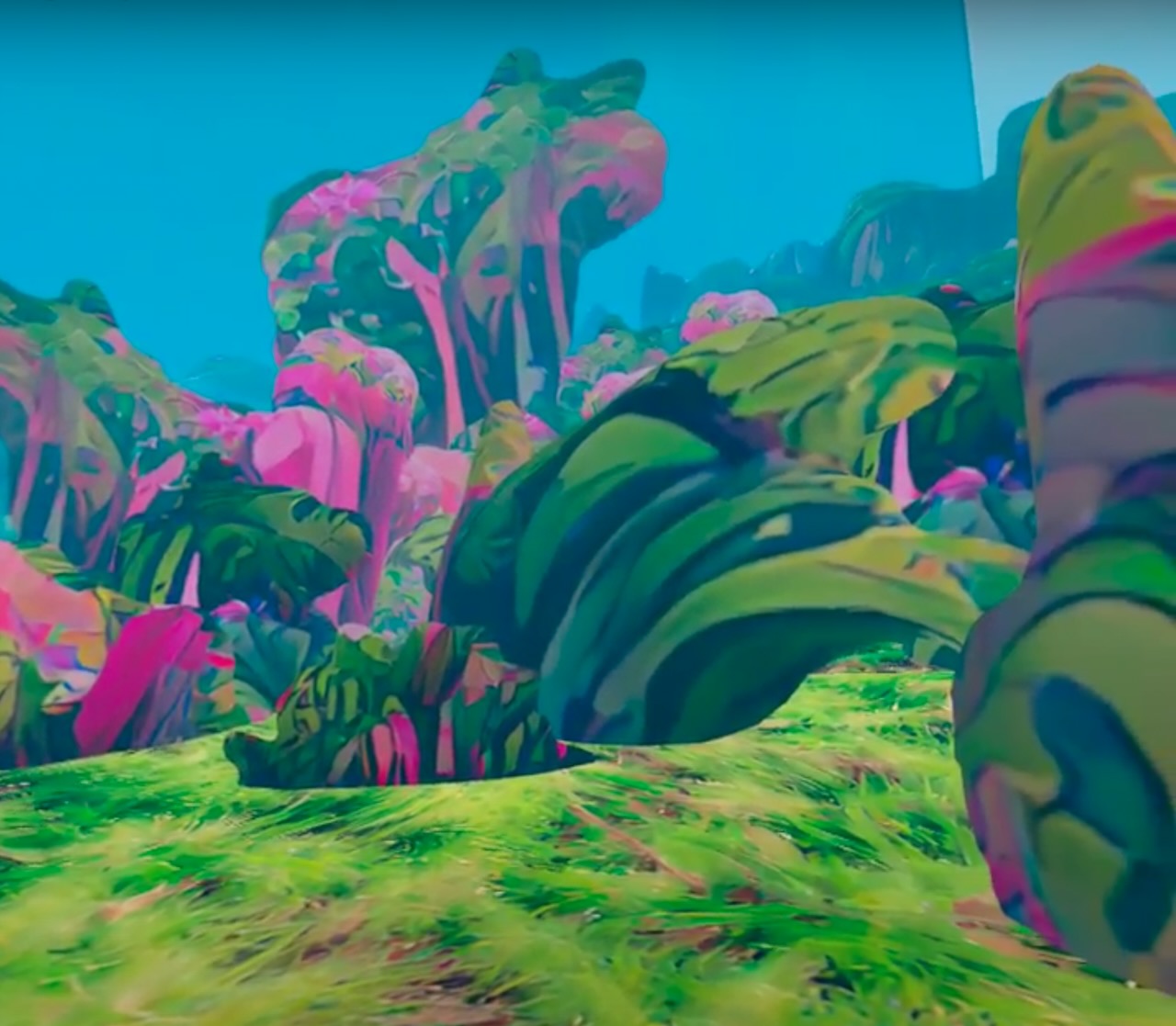


It will be clear from this brief description that Out of the Ordinary/As An nGnách is an operatic experience unlike any other. The response to the final piece has been very positive, both from the non-professional artists who contributed to its co-creation, and by audiences at the festivals where it has been presented. A few people have been less enthused, which is understandable given the novelty of the concept and the nature of Virtual Reality.
Does opera have a future in VR? Only time will tell. The technology is too new and unfamiliar for anyone to be confident about what it offers, and even how to use it. And that proved to be its limitation in co-creation. Whether they were professional or non-professional artists, almost no one involved could easily imagine what they were working towards. As a result, the process was often difficult and people had less control over their input than in the more conventional operas staged in Barcelona and Portugal.
But there is a model now, a precedent that others can experience and respond to. The next iteration of a co-created VR opera would undoubtedly be much easier. The INO project has opened radical new ground that others can explore in years to come.

 François Matarasso