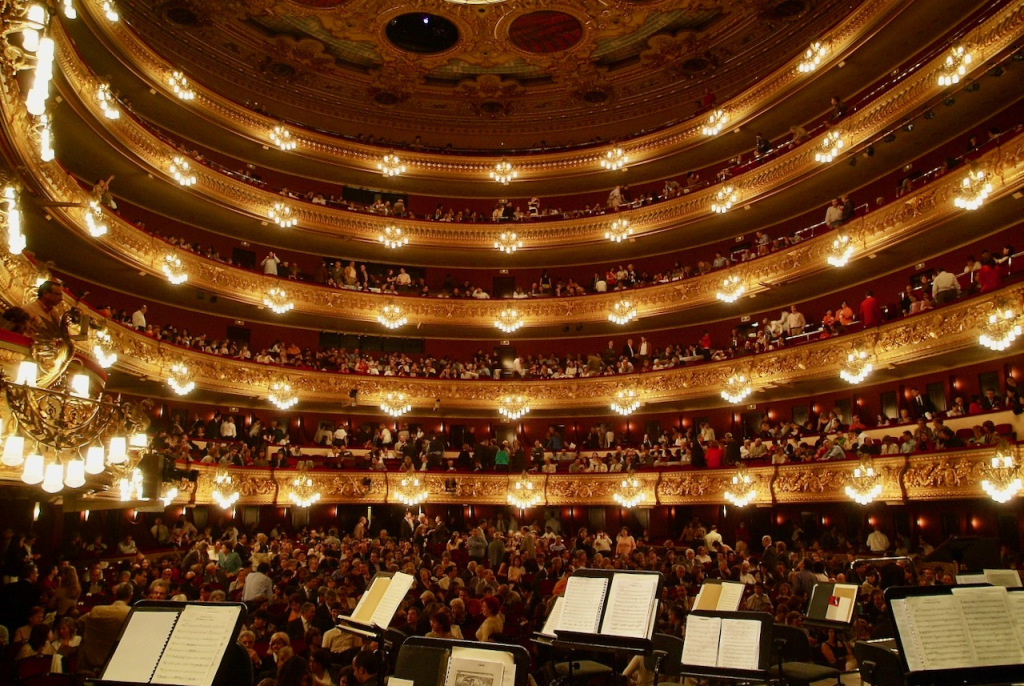
EL GRAN TEATRE DEL LICEU, BARCELONA, CATALONIA
The Liceu theatre stands proudly on the Rambla, the famous pedestrian street connecting Barcelona’s historic heart with the sea. After a fire in the 1990s, its 2,300 seat auditorium was restored in velvet and gold, but now also has state of the art backstage facilities. Off the Rambla and behind the theatre, is Raval, a bustling neighbourhood of narrow streets where 47,000 people live in about one square kilometre. Half were born outside the European Union, and you might hear Tagalog, Urdu or Arabic as often as Catalan or Spanish. Raval is lively and dynamic, home to 250 community associations, a dozen amateur choirs and four independent music schools. And yet, despite 175 years of proximity, one could say that the Liceu and the Raval had never met: it’s not the people of Raval who queue at the theatre’s great portico on the Rambla.
In 2018, the leadership of the Liceu began to build on its existing access policies, such as Apropa Cultura, with a larger ambition to renew the opera house’s relationship with local people, and become a cultural centre for all of Barcelona. The natural place to start was with the theatre’s own neighbours. So began a process of dialogue—among the theatre’s 300 staff and with key partners in Raval, starting with the Tot Raval Foundation which supports the work of all those social and community groups. They looked for connections between activities in-house and in Raval. The Liceu has a costume department: it was paired with two NGOs who train migrants and vulnerable women in sewing and design. Similar links were made with music schools, the art college, a training centre for unemployed people, schools, clinics and libraries—all this to lay the foundations of working together on the many crafts involved in opera production, and to build trust, understanding and common purpose.
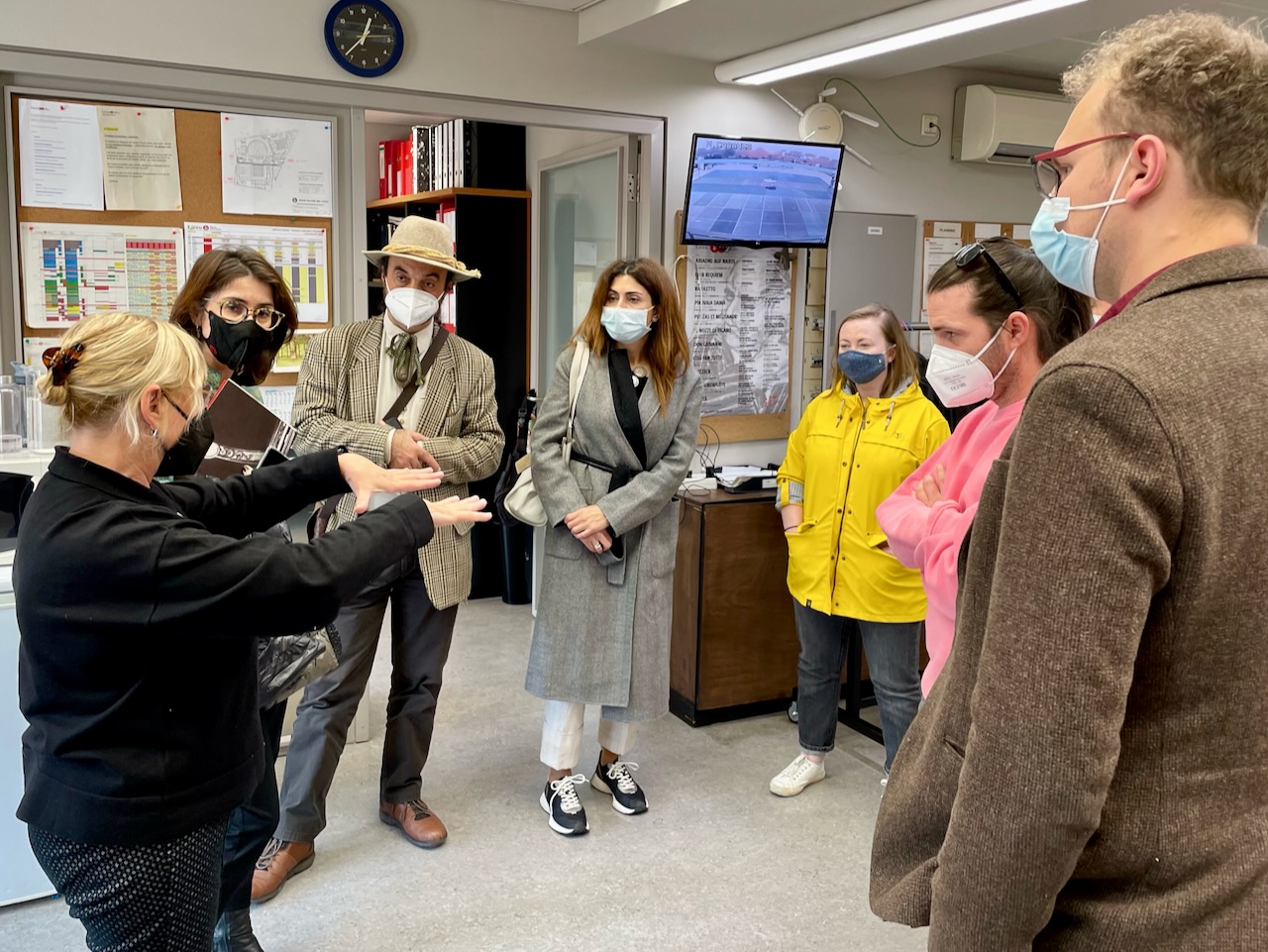


A playwright, Victoria Szpunberg, was commissioned to produce a libretto for a score to be composed by the popular Catalan musician, Arnau Tordera. A creative team was recruited to lead stage direction, design, costumes and music. Interest was growing in Raval and beyond: TV3, a Catalan station, began to film a documentary about the process. Then the pandemic hit Barcelona. For months, everything stopped. The people of Raval were especially hard hit, as the tourism that sustains so many jobs vanished overnight. The idea of working on an opera must have seemed absurd. As the crisis went on, the Liceu made some hard decisions, including postponing the production by 11 months. It would now be part of the opening week of the 175th anniversary season with its première on 5 October 2022.
Small steps were possible during the pandemic. Students from Escola Massana, the art and design school in Raval, worked with disabled artists from the Sínia Occupational Centre on posters for the production. Unable to meet face to face they exchanged their work in progress online, and perfectly met the theatre marketing department’s brief with four complementary designs. Meanwhile, the Liceu team visited health centres, schools and libraries to talk about the project, and perform chamber music to introduce the project to people who were not linked with social organisations. Everywhere they went, they met interest and enthusiasm and by the time the score was ready, in October 2021, hundreds of people were committed to the Raval opera.

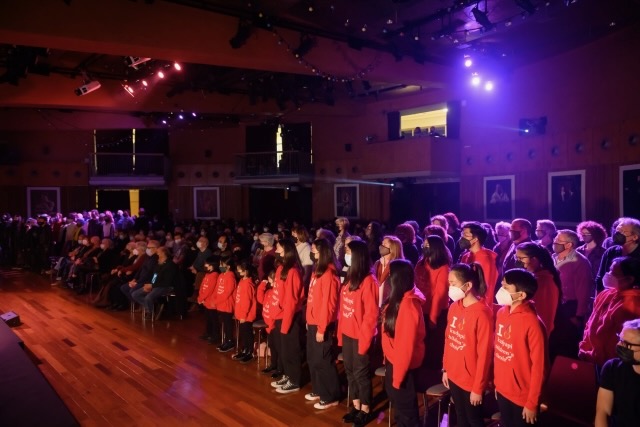

A dozen community choirs wanted to take part, each one gathering a different social group and performing a different style of music: retired people who loved traditional songs of Raval, Filipino kids who danced with as much energy as they sang, teenagers with a passion for musicals, women of African heritage who sang gospel. Under the musical guidance of Cristina Colomer, leader of one of the community music schools, these diverse elements were recomposed into three choirs for the opera. Here, the Co-creation Space, one of Traction’s digital tools developed by CWI Research Institute in the Netherlands, proved to be invaluable in facilitating communication between people. Over 200 people used the web-based platform, to share music, videos and their feelings about the work they were learning. With just four weeks’ rehearsal, this new choral ensemble performed the key song from La Gata Perduda—‘Som del Raval’, (We are from Raval)— in November 2021, at an open air concert for the Raval Festival.
Over the following winter and spring many other aspects of the production came together in a partnership between the Liceu’s professional artists and a huge range of community groups and individuals in Raval. Students set up a photo studio in the street, to make portraits of local people that were screen-printed onto the singers’ shirts by Top Manta a street-wear brand created by immigrants. The costumes of the principal characters were made by Dona Kolors, a fashion producer supporting vulnerable women. The stage floor, a map of Raval, was painted outdoors by graffiti artists, with the assistance of painting trainees from Impulsem workshop.


This wide engagement made sense because the opera was a portrait and a celebration of Raval itself. The title, La Gata Perduda (The Lost Cat) refers to the huge cat sculpture by Botero, standing in La Rambla de Raval and a popular symbol of the neighbourhood. In the opera, it has been stolen by a tycoon who plans to redevelop Raval for sport and tourism, but the sculpture has mysteriously vanished. The narrative uses the developer’s efforts to find the lost cat to present the people of Raval in all their diversity, pride and creativity. His criminal schemes are exposed and the neighbourhood is successfully defended against the predations of outsiders by its inhabitants and the living spirit of the cat herself, sung by a young woman from the Filipino community of Raval.

The performances in October 2022 were sold out, and demand for tickets was so high that a thousand people were invited to attend the dress rehearsal. Most of the audience was setting foot in the Liceu for the first time, and their reception of the opera was passionate and enthusiastic. The curtain call lasted more than 15 minutes, with everyone on their feet applauding the 300 Raval people on the stage. It was a powerful validation of a community that is used to being disparaged in the media, and a moving culmination of the four year journey of co-creation. It is hard to imagine a more artistically and socially ambitious opera, or one with more profound effects on the people involved. The scale of the project, intended to be the first in a long-term programme of co-created operas by the Liceu, shows that there need be no limits to what opera producers can imagine as they seek to renew their art’s place in society.
 François Matarasso