SOCIEDADE ARTÍSTICA MUSICAL DOS POUSOS, (SAMP) LEIRIA, PORTUGAL

The Artistic and Musical Association of Pousos was founded in 1873, when Pousos was a village, on the edge of Leiria in central Portugal. For generations, SAMP’s staff have taught local children to play music, with an orchestra, wind band, choir and other ensembles to enrich community life. One of those youngsters, Paulo Lameiro, went on to study music and sociology in Lisbon, and perform in the city’s opera house. Then, about 25 years ago, he came home to become the SAMP’s artistic director. Under his leadership, the music school expanded into a true community art organisation, taking music and art into hospitals, schools, villages and prisons.
Leiria has two prisons, a local one for adults and a training prison for young offenders, aged 16 to 25, from all over Portugal. SAMP has worked in both, but mainly in the youth training prison, known as EPL-J, and that was where the Traction opera was co-created. In 2015 and 2017, SAMP had produced Mozart operas with the inmates and professional singers, but this opera would be a completely new work. There was no template from which to work, and sharing videos of other operas risked giving the inmates false expectations. Time was one asset at SAMP’s disposal. The support of the prison staff and the Ministry of Justice was another. The plan was to run exploratory workshops each week so that the inmates and SAMP’s musician educators would develop ideas, capabilities and material that would lead eventually to the creation of a new opera.


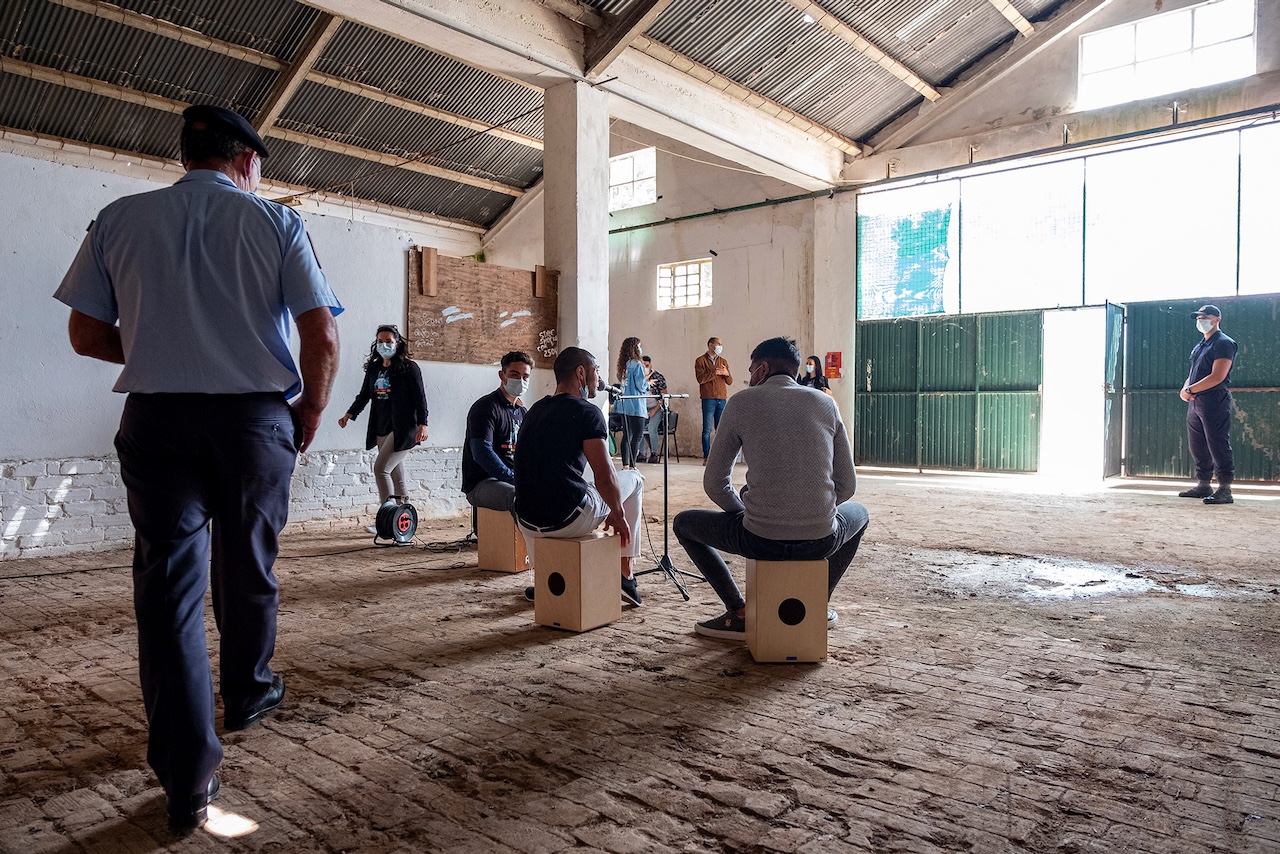
There would be some ‘capsule’ performances along the way, to share and test work in progress. Three young composers were brought into the project, and each spent two weeks in Leiria meeting the young men and learning about the prison context. The original plan was that each of the composers would write one capsule and the inmates would then choose who they wanted to work with on the final grand opera.. In the event, everyone got on so well that it was decided that the three composers, Francisco Fontes, Pedro Lima and Nuno da Rocha, would compose the opera together, with a librettist, Paulo Kellerman.
SAMP’s work is deeply humanist, and the opera project was intended to bring together people normally kept apart by prison life. The inmates were at the heart of the co-creation process, but SAMP also wanted to involve their relatives—parents, partners and even children—as well as prison staff and people in the local community. The difficulties are obvious, because the situation and rights of each group are so different. To take an obvious example, prison staff are responsible for ensuring that nothing is given by a relative to an inmate that might compromise their safety and security. The barriers that separate people in this situation cannot be wished away. The answer was in another digital tool developed for Traction, this time by Vicomtech in the Basque country. Co-creation Stage is a web-based tool that makes it possible to combine live video performances from different locations in real time. It took some experiments to find how to use it in an artistically coherent way but the final performance was hugely enriched as a result—and new connections between people became possible.
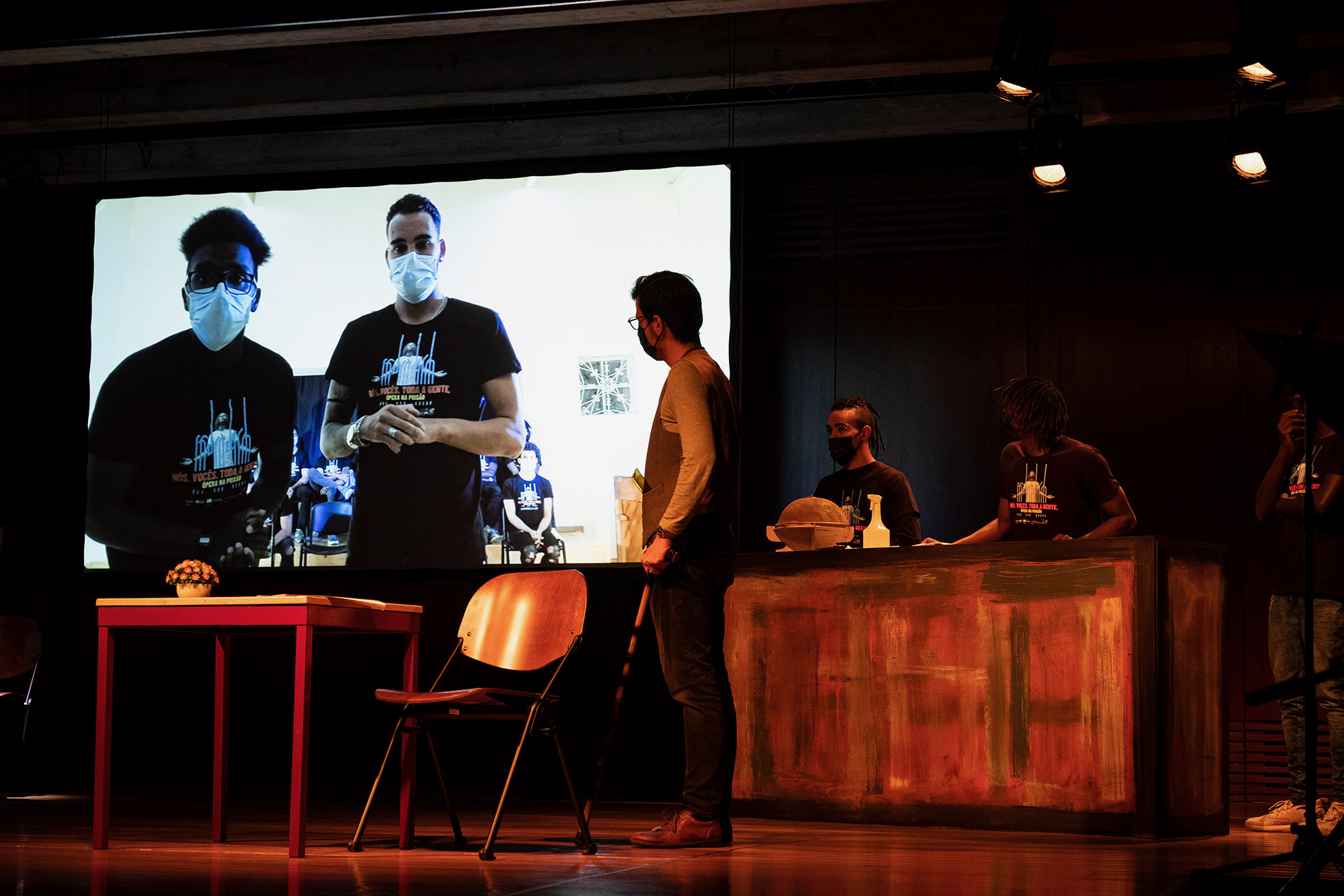


The pandemic affected the project from early 2020, regularly suspending or curtailing workshops. With hindsight, though, it may have caused fewer difficulties than in the other operas because there was time to adjust and the environment was more controlled. Still there were problems all the way, with a week of rehearsal lost before the première in June 2022 when the stage director, Carlos Antunes, fell ill with Covid-19. It also meant that there were fewer capsule performances than planned. A 30 minute work in progress was performed in June 2021, in the prison and at the Gulbenkian arts centre in Lisbon, with a video link to Leiria. This was valuable in revealing weaknesses in the artistic concept and in how the Co-creation Stage was being used to support it.
Intensive co-creation work involving inmates, composers, librettist, director and the SAMP team, led to a change of direction, away from the realism of the first version towards a more abstract, symbolic work based on the myth of Ulysses and Penelope. Their separation, and the life choices that contributed to it, provided the emotional heart of what the inmates and relatives wanted to express about their experience. It was presented in six long scenes (two scored by each composer), in which the two principals were kept apart until the final scene.
Thirty young inmates performed alongside four professional singers, sometimes singing chorally, more often reciting text in a specially-devised rhythmic chant, and also performing rap and beatbox at certain moments. Half were on stage, with the rest projected onto the back walls of the set and forming a kind of Greek Chorus. They performed from the Mozart Pavilion, a former prison workshop converted into a music studio. The combination of a larger than life chorus with the physical presence of other performers was powerful and moving.
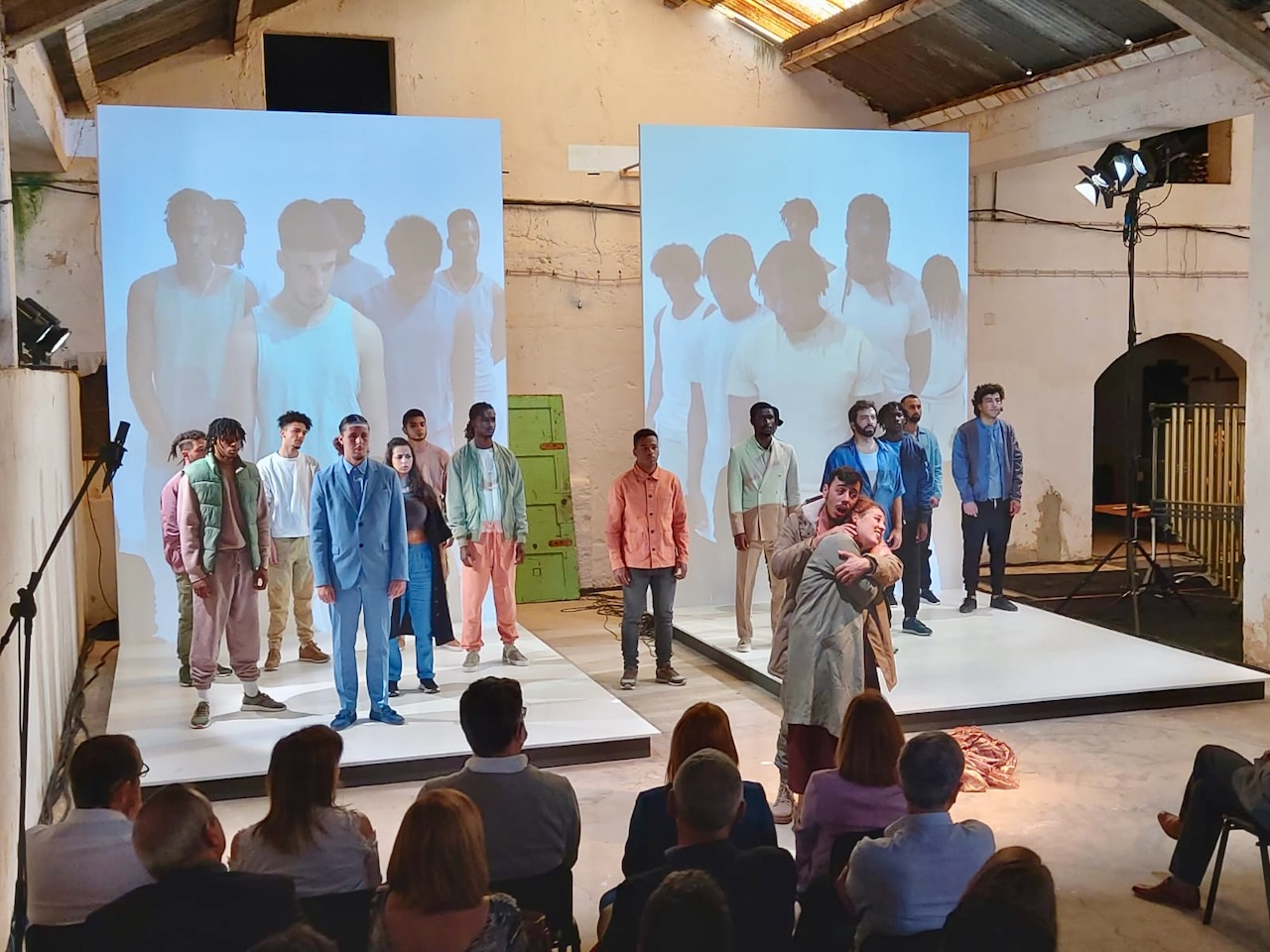

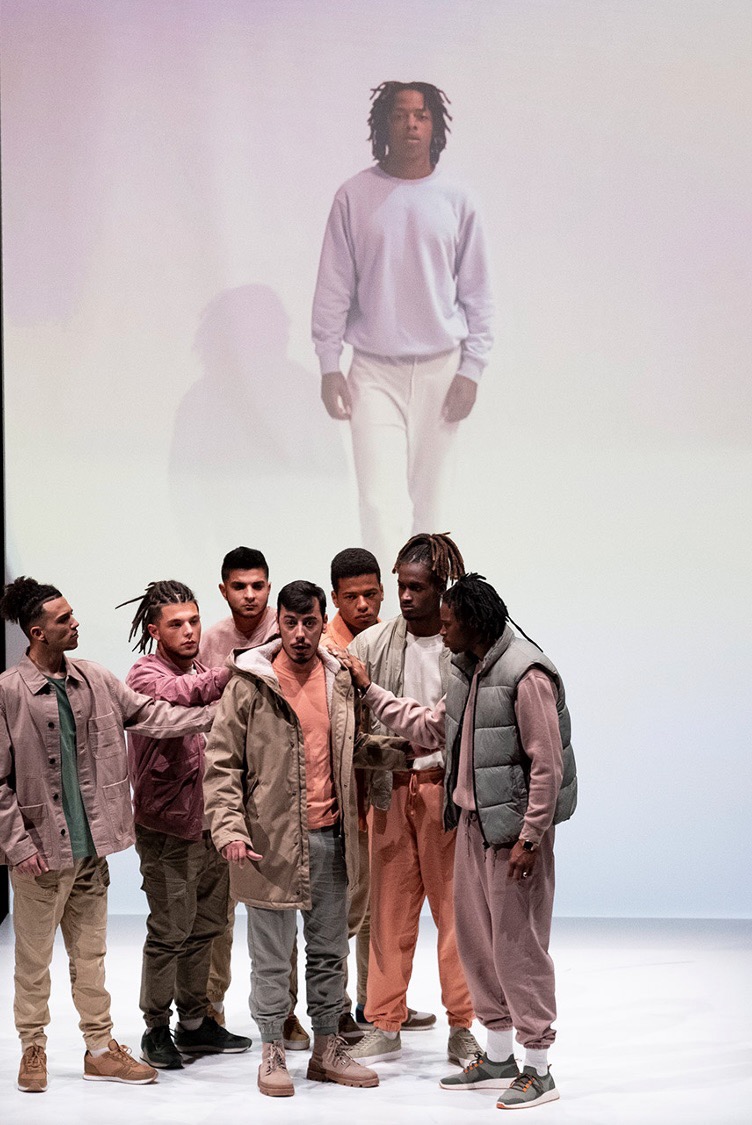


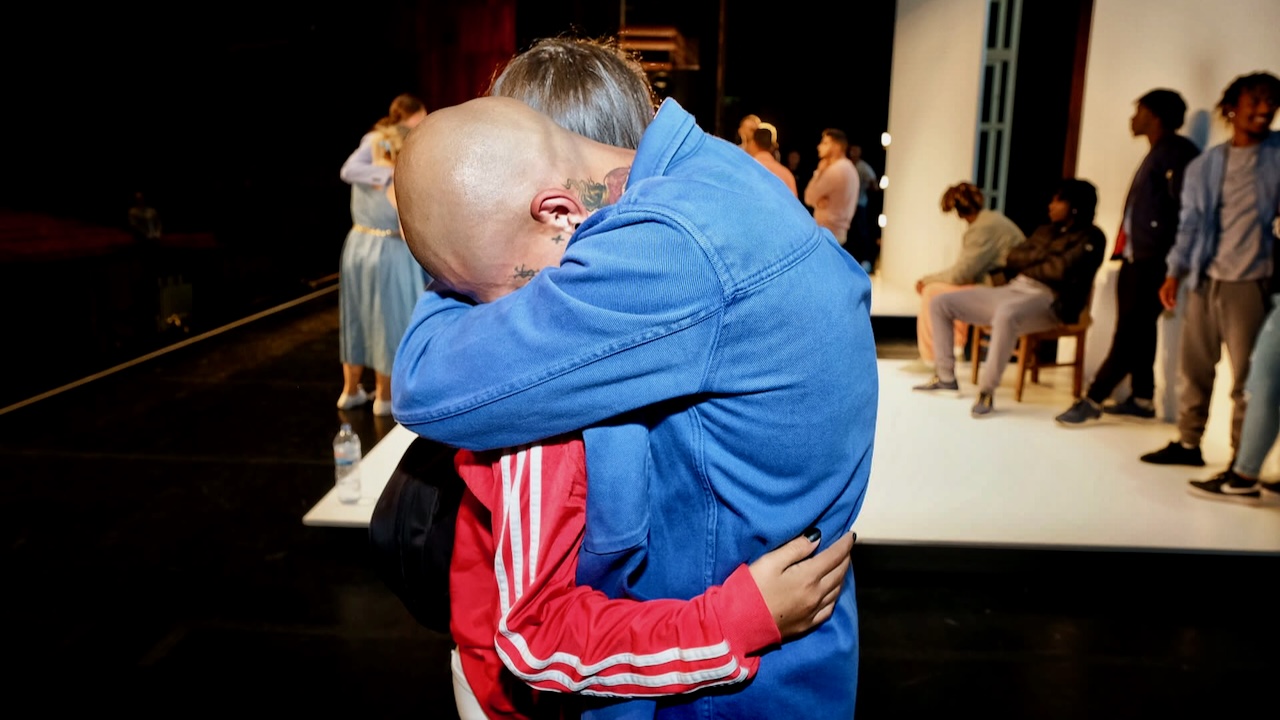
The opera—O tempo (Somos nós), Time (As we are)—also included short scenes that connected and interrupted the main narrative, in which inmates performed with their mothers, and participants from the operas in Barcelona and Ireland contributed by video. In June 2022, two performances took place in the prison, one for the rest of the inmates, and the other for family and guests. Two more took place at the Gulbenkian Concert Hall in Lisbon, with the support of the prison service. Some of the inmates were able to come to Lisbon, with the rest performing by video-link as before from the Mozart Pavilion. Both performances were sold out and a total of about 2,500 people saw the production, including the Portuguese Ministers of Culture and of Justice.
SAMP are steadily building the case for the arts in the rehabilitation of offenders, demonstrating through their quiet, careful projects the transformative value of the work. Many former inmates keep in touch—two were members of the project’s advisory board, where they sat alongside a judge—and several came to see the performances in Lisbon. But there have been cruel setbacks too: visitors to the performances in the prison will have seen candle-lit portraits of two young men who had participated in earlier projects but died violently after their release. There is nothing easy about this work and the SAMP team’s creative skills, experience and commitment are critical to its success.
And it continues, with funds to support music workshops and performances in the prison for the next three years. In November, the two ministers made a joint visit to the prison, to meet the inmates again and see the work on site. After the high point and huge demands of the opera, and the difficulties of the pandemic, everyone agrees that the next phase may be quieter and smaller scale, but it will be equally centred in people’s lives.



 François Matarasso