Stories and Fables: Reflections on culture development in Orkney

I fell in love with Orkney as a teenager when I read George Mackay Brown’s novel, Magnus. His evocation of the ancient but somehow timeless islands north of the north of Scotland was captivating. It was nearly 40 years before I was able to see them myself, with the task of understanding and drawing lessons from the archipelago’s remarkable cultural life, and in particular its flowering since the 1970s, when George Mackay Brown met the composer Peter Maxwell Davies on the island of Hoy—a chance encounter that let to the creation of the St Magnus International Festival.
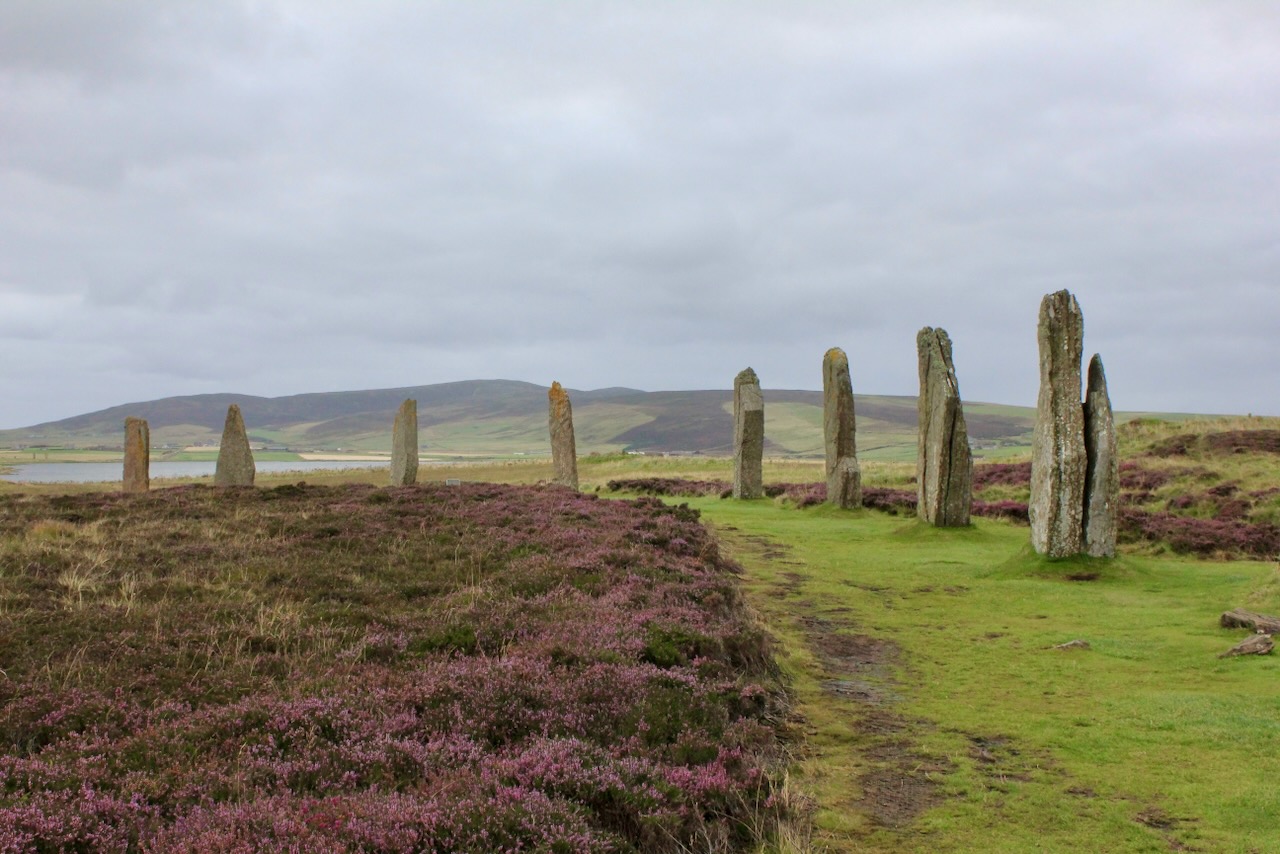
Orkney is one of the oldest inhabited parts of the British Isles, with the Ring of Brodgar and the settlement of Skara Brae, only the most famous of a series of exceptional neolithic sites. Successive ages have left their mark too, from Viking runes to the beautiful cathedral of St Magnus. But it was the living culture I learned about, as varied and impressive as you could hope to find anywhere. I met many exceptional artists and activists in Orkney, and many welcomed me into their homes to talk about the culture of their community. My report, commissioned by Highlands and Islands Enterprise, was produced in 2011.
The study is unusual in two ways. First, because it tries to trace what has happened in a community’s cultural life over a long period of time: the natural starting point – the late 1970s, when both the St Magnus Festival and the Pier Arts Centre were established – is a time when James Callaghan was Prime Minister. Secondly, it is unusual in its focus with why things happened in the ways that they did: in seeking explanations for the distinctive successes of Orcadian cultural development.
In doing this, the study uses an idea first suggested by Edwin Muir, one of several great writers born in Orkney. In calling his autobiography, The Story and the Fable, Muir made a distinction between observable, acknowledged facts and the complex, intangible human side of a person’s or a society’s life. The two are in constant interaction, influencing and being influenced by each other. Neither, alone, can give a complete or accurate understanding of human experience.
Muir’s idea may be seen as another articulation of a recurring polarity: between science and art, between quantitative and qualitative research, between the conscious and unconscious mind, between analytic and existential philosophy and so on. It is characteristic that a writer and an Orcadian should cast this division in terms of alternative forms of narrative.



Stories and Fables: Reflections on culture development in Orkney
A few years later, I was invited back to Orkney to speak at a research symposium. It was a delight to return, even for a short visit, to a place where I felt I had grown to love and where I had met unforgettable friends. It was also a chance to distil the much longer report into a short essay about Orkney and its remarkable culture.
Another Angle of Vision: Some particularities of Orkney culture
 François Matarasso