
It’s a sign of how rich and complex is the practice of co-creation that I still find myself learning about the nature of my role as a community artist after so many decades. In the Traction project, I worked with people who have enormous expertise in music, theatre, visual art, design and technology but, with a few exceptions, limited experience of working with non-professional artists and members of the community. My role in the partnership was vague. Even the job title in the project proposal – ‘Creative, Social and Artistic Manager’ – meant nothing to me, nor, I suspect, to anyone else.
So, without a job description or knowing most of my colleagues before the project, I began as I usually do – by listening. That’s a more complex and creative process than it sounds. For one thing, most listening doesn’t involve words. At the outset of a three year multinational cultural research and production project most of what the people involved can say about it is either imaginative projection or just wrong. No one knows what is really going to happen, so their words say more about their hopes, anxieties and desires than about the project itself. That’s tremendously important, of course, as the members of a team begin to understand one another, but it’s not the same thing as the work.
Listening is also a metaphor for a broader receptivity, in which I am paying attention to how people are, with me and with each other, and to what they don’t say – the careful and unconscious omissions. The issues that people dismiss or hurry past often turn out to be important as the work develops. And I’m not only a listener – naturally, I am also contributing to the conversation, interpreting what I hear and responding to other people’s input. Listening is active and engaged, a subjective, creative process of storytelling from which emerges a common commitment to shared idea.
One thing I’m not contributing at this stage is any opinions about the art at the project’s centre. With no personal artistic practice or identity to protect, I am free to wait, listen and discover what will emerge from the interactions of the unique group who have gathered around this project, this creative possibility. Later, like a crewmember in a racing yacht, I will use my weight to influence our direction, but even then, my concern is with the process and meaning of what is being created, not the form. Others will always be much more skilled than me about those questions but it’s that very difference that has enabled me to work on art of which I have only an outsider’s understanding, such as opera, South Asian dance, traditional music, playwriting or documentary photography.
After many years, I have come to see that this is a kind of negative capability. Perhaps the most important part of my role as a community artist is simply to hold the doubt and anxiety that others may feel in a process that is defined by uncertainty – defined by it because, as soon as you invite people to work together on an equal basis you give up any possibility of controlling or even knowing what will happen. I’m a safe repository for other people’s uncertainty partly because it’s not my own (I’ve also learned to deal with that, but it’s a different process) and partly because I have been through this process so many times that I know it will not fail us, provided we respect its internal logic and values. And that is something in which I do have expertise.

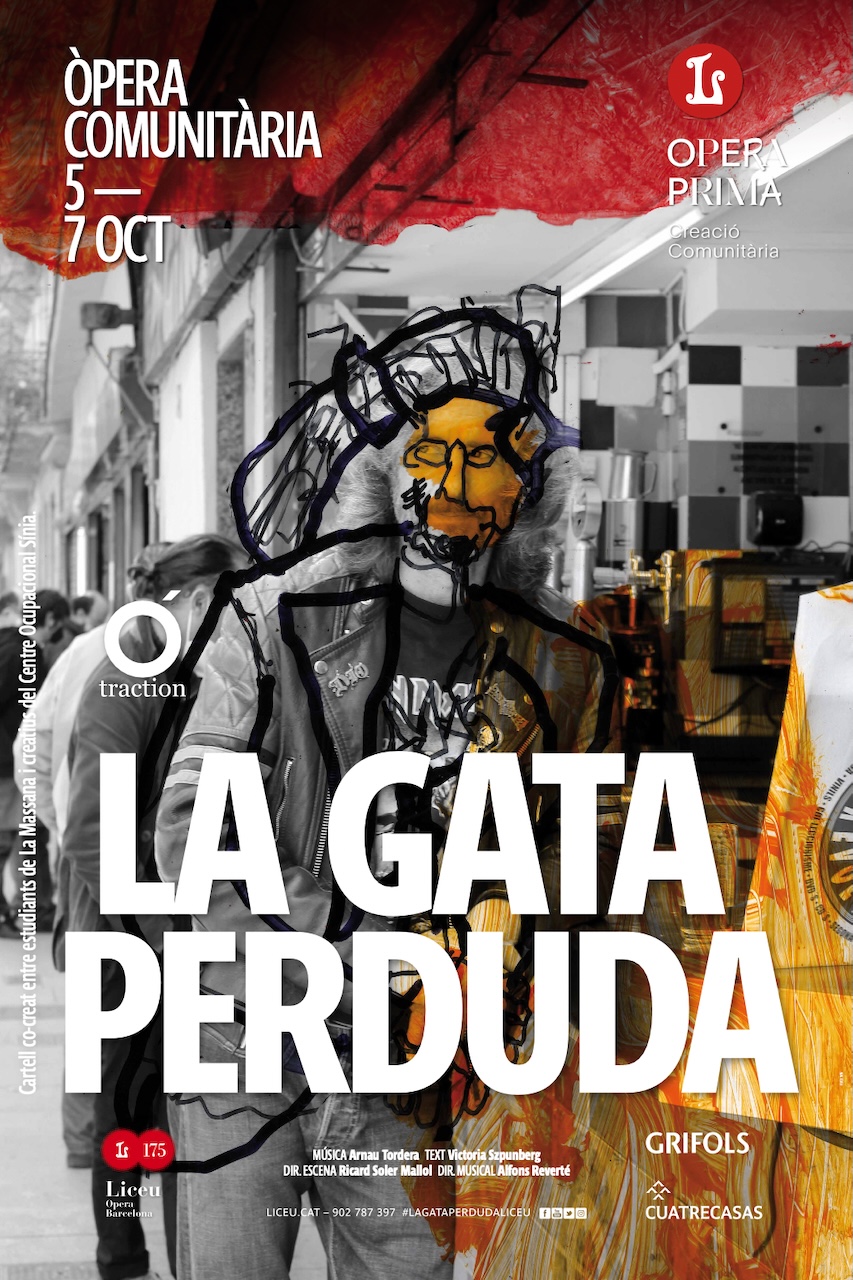

The photo at the top of the page was taken during my first meeting with the artists who designed the posters for the Traction opera in Barcelona, La Gata Perduda
 François Matarasso