
Today, I’m republishing the first in a series of posts that originally appeared on websites that no longer exist. As I said a few days ago, my reasons for closing those sites remain sound, but some things vanished that merit another look. Sunday morning seems a suitable time for that, so I will make this a regular time for these old leaves.
National treasures
Originally published on Parliament of Dreams, 30 May 2013
Gunnie Moberg (1941-2007) was a photographer, painter and designer, born in Sweden and an Orkney woman by adoption. I first encountered her work when I was researching Orkney’s culture in 2011, and I was struck by the affection she inspired. A small grant from the Heritage Lottery Fund has enabled Orkney Library and Archive to acquire and conserve her archive. A website has been created to tell the story of Gunnie Moberg, her work and her important place in Orkney’s remarkable post-war cultural life.
There are photographs of the natural world of the Northern Isles, including birds and seals (a particular love), of the ancient past, of friends and her connections with George Mackay Brown and other Scots artists. But the page that sent a shiver up my spine was the archivist’s thoughts about the intimacy of handling a person’s leavings;
Today in the strongroom I came across a note from Gunnie, perhaps to herself, it has cup rings and a torn edge. I think it helps me think about what makes her vision of Orkney so important. It was her recollection of the artist Paul Klee’s quote: ‘Art does not reproduce the visible; rather, it makes visible.’
In the last years of her life, I got to know Olive Cook, writer, painter and archivist of her late husband’s photographic legacy. In her nineties, she still lived alone in the home she had made with Edwin Smith, 30 years after his death. He was a living presence, always referred to by Olive as ‘my darling’.
She had hoped that the house, with its handmade wallpaper and collection of books, papers and artworks would be preserved after her death. But it went to auction, although her personal and professional papers were acquired by her former Cambridge college. When we heard about the sale, my wife Carol went to Cambridge and rescued some of the things that had least value to collectors – the folios of artwork from the 1930s, old sketchbooks, postcards Olive and Edwin had exchanged and so on. The flotsam of a life. One day I shall have to find a good home for it, for the sake of their work and its contribution to mid-20th century English art. But also for the sake of the remarkable woman that we were lucky enough to know. (The Light Ships, a book I made with people in Lincolnshire in 2014, was a tribute to Olive Cook and Edwin Smith.)
In May 2013, the art world was frothing excitedly at having ‘saved’ a Constable landscape for the nation, at a cost of £23 million. Apparently, it was ‘unimaginable that this particular painting might have ended up anywhere other than in a UK public collection’. It’s a fine painting and an important piece of English cultural history, but I can’t say I would have minded particularly if the residents of Los Angeles, Tokyo or Buenos Aires had got the chance to enjoy it in their public collections. We are not really deprived of Constables paintings in Britain’s galleries. But £23 million?
The Gunnie Moberg archive was saved – yes, really saved – at the cost of £78,500. There are many Gunnie Mobergs and Olive Cooks who have helped make our culture what it is. These are truly, in the words of my late wife, national treasures. We should celebrate them more than we do – and appreciate them while they are still alive.
Postscript, 12 July 2024
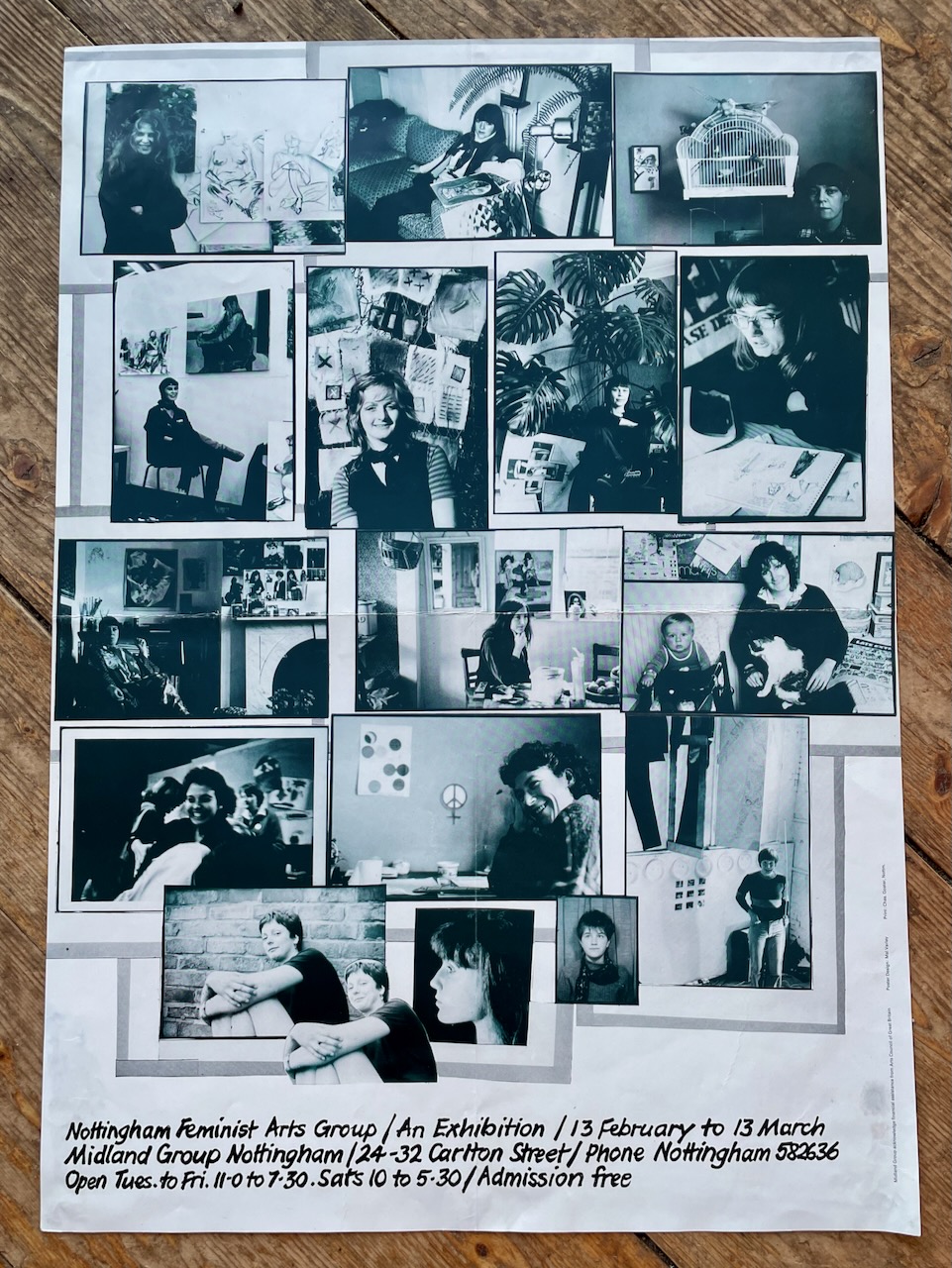
Eleven years later, it is Carol’s archive I am dealing with—the creative traces of 55 years of community art, as well as performances, commercial work and her own art. At the end of this month, with old friends in Nottinghamshire, we’ve organised an exhibition, with workshops and a celebration of Carol’s life. We need to preserve the archives of the everyday artists whose work belonged to and enriched the communities where they lived, but in the end, their work, our work, lives on in the people we touch.


 François Matarasso
Responses to “The value of small archives”
Very much appreciated this – key is finding an institution that also values the materials as well as the time and support to organise it!
LikeLiked by 1 person
Indeed, but institutional interest will only follow an evolution of what and who we value as a society: that’s the fundamental challenge.
LikeLike
Absolutely! Your point about Constable is so well made!
LikeLiked by 1 person