One of the most read pages on this site is A (very short) history of the British community arts movement. Perhaps it comes up if you search for the history of community art. I wrote it years ago and couldn’t remember what I’d said, so I re-read it today to check up on myself. Overall, I thought it was a fair account, though of course it reflects my experience and many other versions could be given of that same history.
But what struck me was my suggestion that arguments about interpretations of politics contributed to the movement’s fragmentation and defeat – at least in its own terms – in the 1980s. I still think that’s true but it depends on understanding that, between the late 1960s and the mid-1980s community art saw itself as a movement. It was a political idea that people finally disagreed about: what was the movement’s goal, what were its values, how should it go forward?
Participatory has grown in scale, legitimacy and ambition since the 1980s, but it has done so without much political vision, at least in the UK. (I wrote about the transition in ‘All in this together’) Today, participatory art is described as a sector or a field – taxonomical terms that can be applied to most forms of social organisation. A movement is organising for social change. A sector is concerned about its working conditions.
Working conditions are important but I miss the days when people working in community art saw themselves as part of a movement with a political purpose. I’m not nostalgic — there’s a plenty about how we worked back then that I’m glad to see go — but working together for social change remains an inspiring political idea to me and it feels more relevant than ever in today’s world.
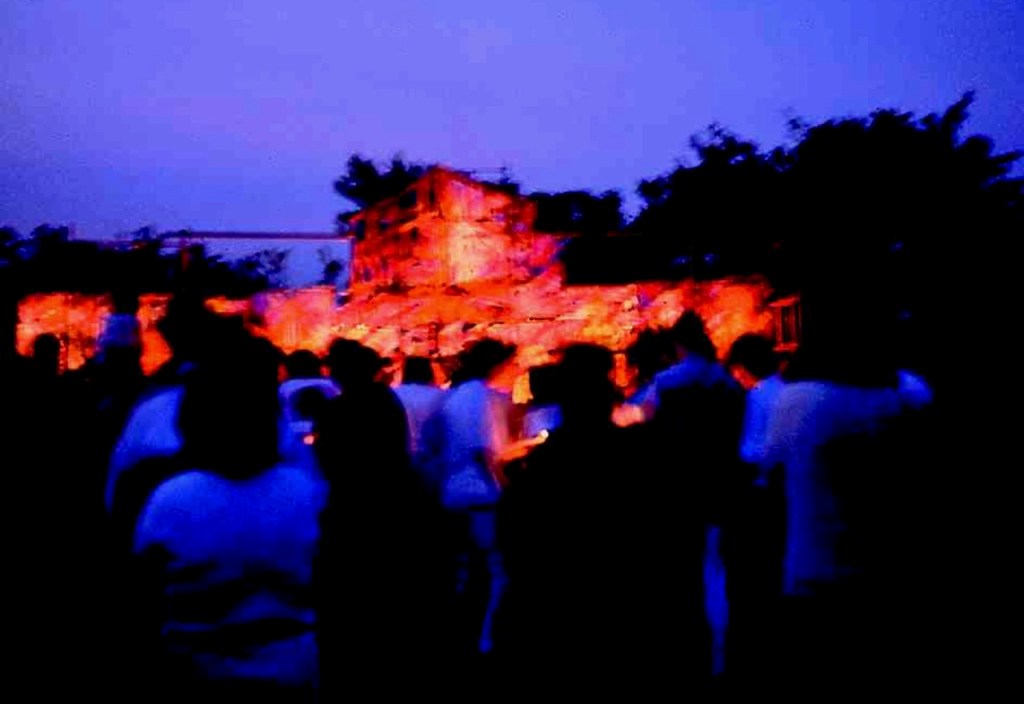
The photo above was taken at the finale of ‘One Small Candle’, a community art project I did with people in South Normanton, Derbyshire in 1986.

