Arlene Goldbard continue our monthly podcast, A Culture of Possibility, as part of MIAAW. NET. The latest episode is about the work of Restoke, which we featured 5 years ago. much has changed since then, through hard times, but with courage and creativity, as Arlene explains below.
You can find it and all episodes in the usual places, along with miaaw.net‘s other podcasts by Owen Kelly, Sophie Hope, and many guests, focusing on cultural democracy and related topics. You can also listen on Podbean and find links to accompany the podcasts.
Clare Reynolds, Co-Founder and Co-Director of Restoke in Stoke-on-Trent—a post-industrial city in the Midlands of England—was our third interviewee on A Culture of Possibility, back in our first season in 2021. Hearing quite a bit of buzz about Restoke’s current work, we thought it was time to check in again. A lot happened during those five years—the COVID pandemic and a bunch of other bad news, to be sure, but also a remarkable amount of good news for Restoke and its communities.
In 2021, Restoke was acquiring a building which is now a well-established center for its work. “We restored the space,” Clare explained. “It was used as a magistrates court for 50 years, but originally was a ballroom on the first floor of this old town hall, so we restored it back to a ballroom during COVID, and then reopened. During that time having a place, especially having a really big space to gather people, was hugely important. At the same time, we became a National Portfolio Organization with Arts Council England, so we’ve had real growth, but also stability as an arts organization, which is amazing. The building is both a source of beautiful connection and gathering, and also a lot of work, a lot of resource, and a lot of DIY.”
For those who aren’t familiar with English grants programs, Clare explained National Portfolio Organizations. “It’s a rolling program of funding. If you become an Arts Council national portfolio organization, you get three years of guaranteed core funding to be able to deliver your program. Historically, it wouldn’t have been many community arts organizations that got it, but when the Arts Council here in the UK did its latest strategy, which was called “Let’s Create,” that was driving a lot more money towards organizations that are working really closely with their communities and really thinking about the relevance of their art to the places they were in. I think a lot more smaller grassroots organizations joined the portfolio in the last round, and we were one of those.”
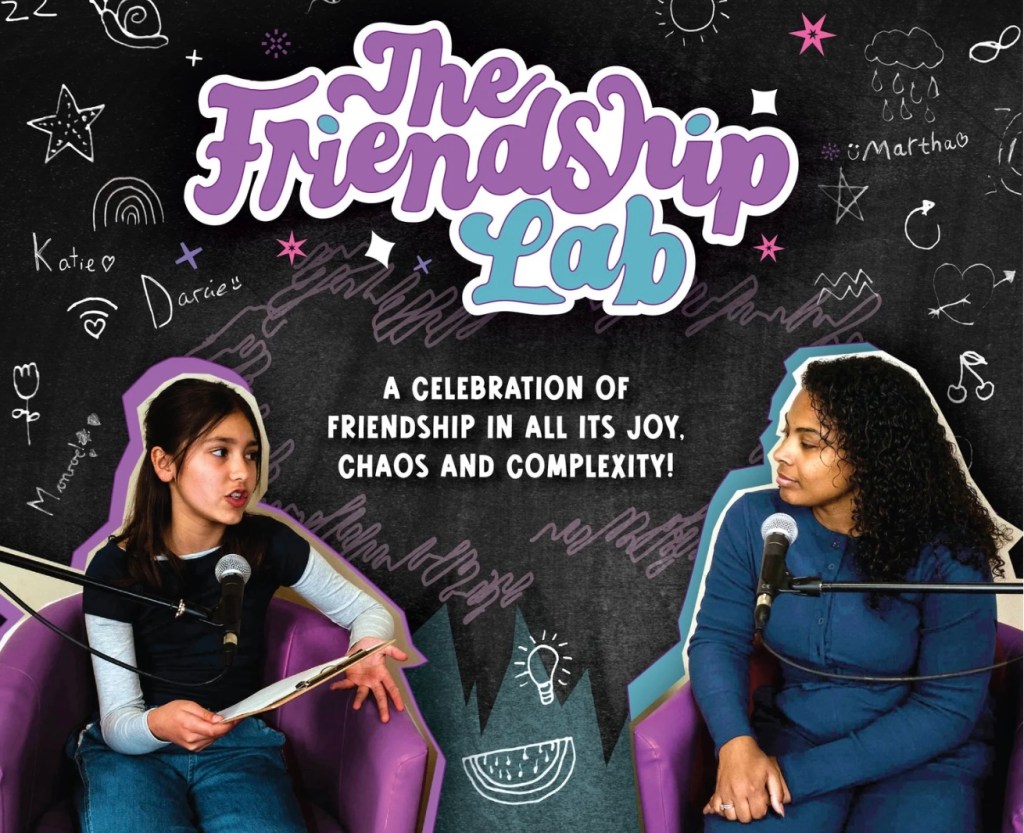
Restoke is busy! Clare estimated that there are around seven workshops a week in their facility—for all ages, toddlers, children, adults. For quite a while, they’ve created a major show every two years, and this year, that’s accelerated. “I’m working on a new project with girls aged 10 to 13 that’s called The Friendship Lab, and that’ll be performed in July. Historically it’s been every two years, but now we have the freedom to flex and respond. This show kind of came out of nowhere after working with this age of girls, and I was like, ‘Oh, these girls are experts in friendship, we need to make a show about friendship with this age.’”
François looked back to the COVID period, asking how Restoke had responded to the many difficulties the pandemic and related changes represented. How did they get from there to here?
“Our performance work,” Clare explained, “has always been addressing social issues and bringing people together to look at issues through different lenses, a lot through lived experiences and sharing stories. We’ve developed a whole practice around that work. Our first project when we returned after COVID was a brilliant opportunity, because we were commissioned by the National Theatre’s Public Acts program to create an episode of The Odyssey. They were doing a nationwide retelling across five different locations, and we were asked to create one of those episodes, The Lotus Eaters. It was a brilliantly resourced and funded project, and we were able to work with a lot of people in Stoke. It was one of my artistically favorite shows that we’ve made.
“We started to notice that post-COVID, people were not okay. We exist to create those spaces where people can talk freely about their experiences and share their lived experiences. That’s always been an edge that needs a lot of care and support and a lot of ethical consideration. I don’t know if it’s the post-COVID world or the cost of living crisis and all the turbulence going on, but there’s obviously been this stripping away of social services, and in places like Stoke, that’s felt really strongly. There isn’t really that support system around people anymore, so when you invite people into a space where they can free themselves or open up some of that, and they’re not being supported elsewhere, we’ve had to consider the ethics of the work we’ve always done. Is that safe now when people are struggling just to live and to afford food and to get their basic needs met? We’re having to reconsider working in a way which opens up conversations about difficult things, because whereas previously we felt like we could hold that with our frameworks, now it feels trickier. So we’re doing a lot of work this year looking at that and how we continue to exist and to make work that brings people together in the same way, but that is maybe safer. We’re working things out. Restoke can feel like a real haven, a real other space for people, and continuing to do that with the world outside the building is getting harder.”
You’ll want to listen to the episode to hear more of the thoughtful conversation about care and related subjects this stimulated.
The title of this episode comes from a nice turn of phrase Clare shared in talking about Restoke’s plans, “scaffolding hope.” She explained that it may come to pass that “you realize that you’re feeling quite hopeless, that there’s a lot of hopelessness. As organizations and people embedded in these communities, you feel that too, like you’re not separate from it. So we’re trying as an organization, as creatives, to look at like what makes us feel hopeful and what keeps that hope alive for us. That is often the arts, the making and the sharing of that with other people. We realize that we create structures of hope for other people, opportunities and places and projects that make people feel more hopeful about where they are. How do we expand that to ourselves and to the organization?” One more great question that came up in the episode.
Some of Restoke’s more recent projects have been cocreated with young people. The Power Project is a group of teenagers creating their own performances and other projects. The Friendship Lab features a group of young girls who give adults advice on their friendship dilemmas, which sounds fabulous to me. Click around the Restoke website to learn more about all of its projects.
Here’s an extremely sweet clip from The Friendship Lab, Restoke’s newest show.

