
Can art be separate from war and suffering? Not until human beings find the courage to live together in peace. But there is usually a large and comforting distance between those of us who spend our lives creating art and the places where people kill and suffer. It was moving to watch Camille Cottin open the 77th Cannes Film Festival by acknowledging the context in which it is happening:
Her well-judged speech, sharply critical of the film industry in other respects, was perhaps the best that can be made on such a red-carpeted platform. Still, the distance remains,. Since peace is not in the gift of artists, perhaps the most we can do is not turn away, and share art’s truth-telling power with those who are silenced, and its healing consolations with those who are hurt.
Over the years, I’ve met some extraordinary people who, by necessity or choice, have committed themselves to their own versions of that idea—in Latin America, Africa, the Middle East and elsewhere. Their courage and resilience, the art they create and the good they do is why I hold to this work of co-creation in dark times.
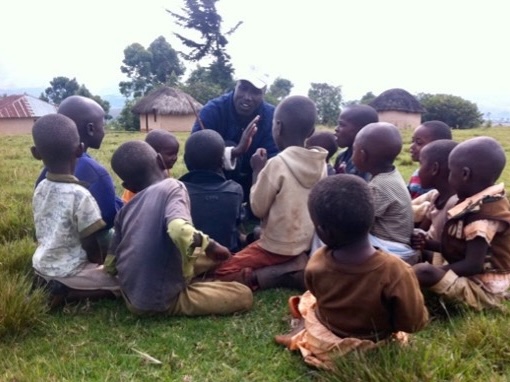
Eraste Rwatangabo was one of these people, though not one I had the chance to meet. He directed a community theatre programme advocating for girls’ education in South Kivu (Democratic Republic of Congo) that was supported by the UK-based charity, In Place of War between 2008 and 2011. On 14 October 2011, the project team were returning to their main base of activity when they were attacked by a militia group. Seven of them were killed, including Eraste, and three others were gravely wounded.
I know this only because Eraste (whose name means ‘beloved’) was a friend of James Thompson, Professor of Applied Theatre at Manchester University. Ten years later, James wrote about these events in a journal article. It is an exceptional piece of writing and I recommend it to anyone who cares about community art, co-creation and social justice. James writes about how Eraste’s murder caused him to rethink the very basis of his work, and to consider how the decades of its normalisation (which I describe in A Restless Art) had led to a loss of some of its basic values—including love. James talks about this experience in the latest episode of the podcast I co-host with Arlene Goldbard. The links will tell you more about Eraste Rwatangabo, his work, and James Thompson’s questions about the place of art and selflessness in a world at war.
- ‘To Applied Theatre, With Love’ – Article by James Thompson.
- Theatre in Place of War – A Podcast from MIAAW.NET
- James Thompson on Theater in Prisons, Conflict Zones, and Places of Care – Arlene Goldbard on our conversation with James
PS In keeping with my recent note about difficulties updating this site, I’m currently only able to include excerpts from posts in the newsletter, which means subscribers have to click on the link to read the whole post. I hope I can sort it out, but in the meantime I apologise for the inconvenience.
 François Matarasso