
This is an unusual post. It has nothing to say about participatory art or co-creation. It is about the eviction of a community of Roma people who have lived quietly for at least a decade in a former industrial site in Sofia, Bulgaria. To some it might appear to be ‘a quarrel in a far away country between people of whom we know nothing’ as Neville Chamberlain saw the Czechoslovak crisis in 1938. I don’t think that. On the contrary, I believe it is the work of community art to challenge and help overcome the ignorance, prejudice and discrimination that lead to events such as those described here.
The text below was written by Yuriy Vulkovsky, an old friend I met in 2002, when I worked on the Living Heritage programme. Since then, Yuriy has continued to work with poor and marginalised communities in Bulgaria, often applying the same principles we used then. With his permission, I’m sharing a translation of what Yuriy posted on Facebook about his visit to the community whose homes were destroyed just before Easter. His piece speaks for itself, but you can read and see more about the events in these two news reports (in Bulgarian):
- Deutsche Welle – “Sugar Factory”: this is how they erase Roma in Bulgaria
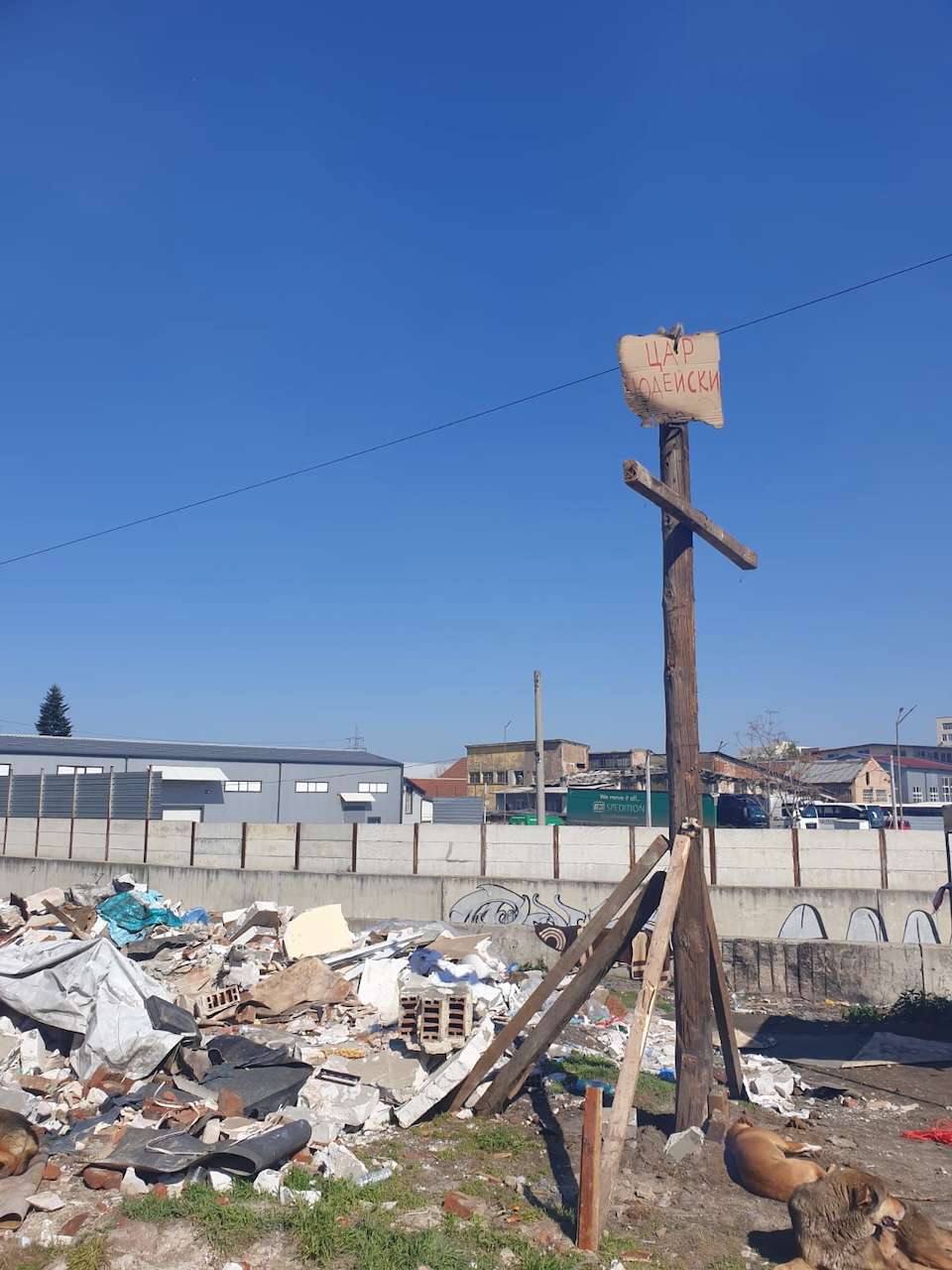
- The cross of God was erected in the destroyed ghetto in “Sugar Factory”
And you can read more about Roma people here:
Community art is about the rights, culture and inclusion of our most vulnerable fellow citizens, or it is nothing. To this, I too am a witness.
‘I am a witness’ by Yuriy Vulkovsky
We have all witnessed cruel injustice being perpetrated before our very eyes: not houses being destroyed, but people’s lives.
Yesterday I was amidst the destroyed houses, with my wife and our two small children. We took Easter sweets to the homeless children, but mainly to sit with the people for a while, to let them know that they are not alone, that someone cares about them, to listen to them, to talk to them.
It was not easy for us. We were scared because we didn’t know how we would be welcomed, what we would find. We didn’t know how angry the people might be and if they might hurt us or kick us out. I didn’t know if it was right to take my children somewhere that might be dangerous for them.
My seven year old son was embarrassed to get out of the car. I told him that I was worried too, but it was important to go.
But people greeted us with applause. Twenty big, strong Roma men who were sitting at the entrance, in front the destruction, applauded us for coming to be with them, to bring something to their children. I was terribly ashamed that they were applauding me. We didn’t deserve applause for anything.
And today I am a witness. I read what is written about this, but I went there and I have to testify today because I have no right to remain silent.
This is what I saw:
- Good people who don’t need a handout, who wanted to treat us, pushing food into our children’s hands. People who welcomed us even when they had nothing left.
- People with jobs and professions (like Stefan, the construction worker we talked to for a while).
- People who invested a lot of money to improve their houses in the Sugar Factory site. They showed us pictures of their home, which were not shacks, sheds, ruins – no, they were beautifully maintained houses.
- Elderly disabled grandmothers, with a whole box of medicine beside them, under a screened-in shed.
- Lots of kids, young and old, who can’t go to school now because there’s nowhere now to shower or wash. Their notebooks, pencils, textbooks are under the rubble, for God’s sake!
- Strong, mobilized people – men and women, young and old, none of whom whined, complained, or cried. They simply found their lives ruined. And many people who were just silent and looking at one point.
- Volunteers and supporters who didn’t sleep the nights before the bulldozers came so that they could meet them, and no child would be awakened by police shouts and batons.
I also saw a huge field of destroyed houses with people among them. A disaster created not by nature but by other people. Just 10 minutes from where my family lives.
And let me write one more thing: I understand that the situation is not that simple. I understand that some of the houses were unsafe. I understand that some people were causing trouble, and some of them were criminals, possibly (only a court can determine that). I understand that ghettos are generally not supposed to be there and the state and municipality should be working for solutions.
But nothing justifies what happened here and what continues to happen before our eyes. NOTHING. NOTHING!
People, families, children should have been re-housed BEFORE their homes were destroyed. Going in at 4am with police and water cannon is absolutely unacceptable and inhumane. They should have gone in with an army of social workers and psychologists, offering an individual needs assessment of each child, to secure its wellbeing and future. And many more things. And now the institutions should be ashamed and act.
And you, my friends, no matter what you think, go see what I saw. Then write again on Facebook if you have the strength and the will.
If you want to help, in the first instance I recommend contacting ATD Fourth World – Together for a Life of Dignity – they are on the ground.
 François Matarasso
Responses to “‘I too am a witness.’”
Thank you François, and happy Easter —I
LikeLiked by 1 person
Thank you Francois. As you have enabled me to read this and to hear the story. I too become a witness.
LikeLiked by 1 person
Thank you Francois – a timely reminder of the need to bear witness
LikeLiked by 1 person