
Looking through old files for material that ended up in the post about how my work was influenced by Welfare State I realised one big change in my process: the genesis of ideas. In my early years – my twenties, I suppose – most of the projects I worked on began with an idea of mine. It was often not much of an idea – let’s do a fireshow about a local legend, or a puppet version of A Christmas Carol for a holiday playscheme – but it was the starting point, and it came from me.

It’s hard to be sure 40 years after the event but I think I saw that as my responsibility: I had to come up with an idea and invite people to take part. To be fair, I wasn’t precious about my ideas: they changed in execution as other people contributed, and we didn’t bother with credits. I just assumed it was my role.
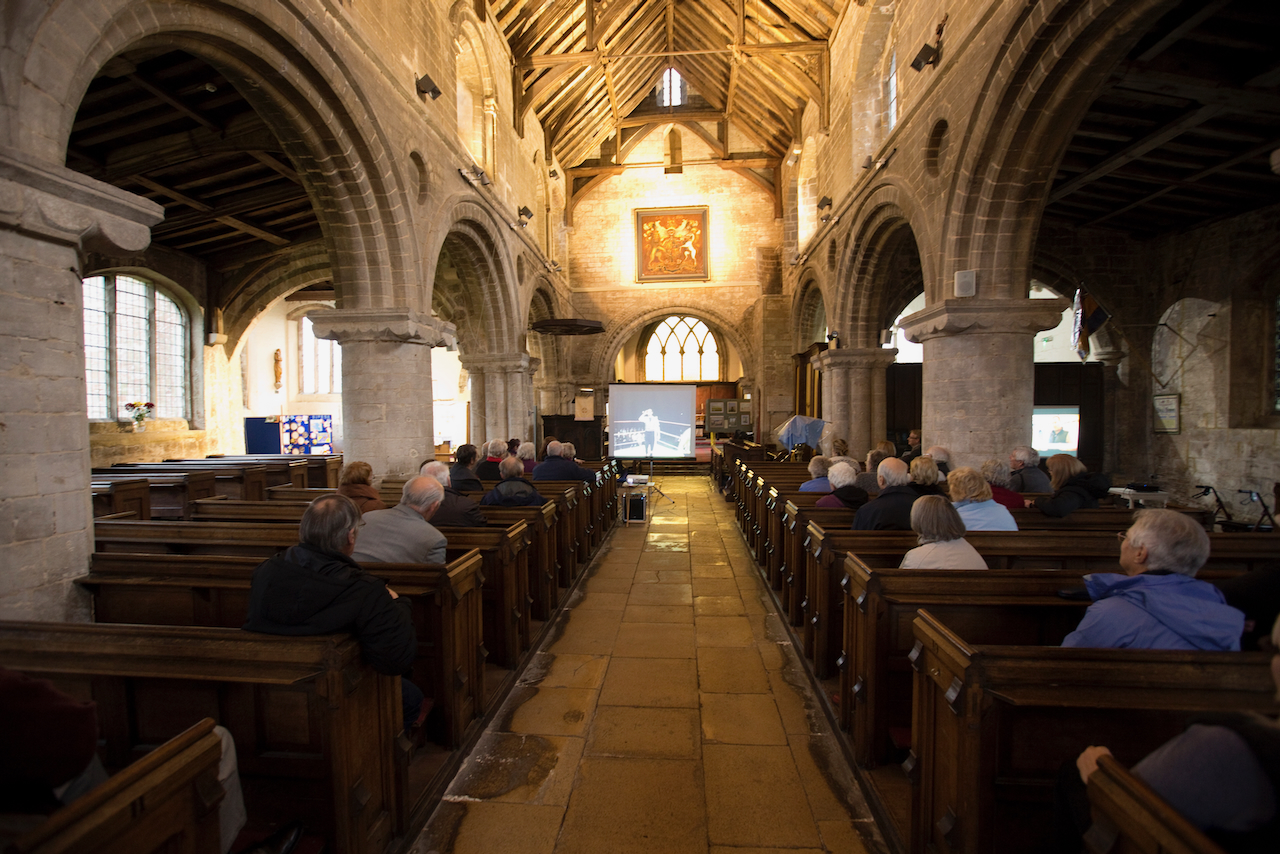
My projects sometimes still begin with an idea of mine, but it has become much less common and it is usually in response to a commission or a situation defined by others. The genesis for The Light Ships (2014) – a project about the place of the church in rural communities – was a response to a commission that involved 12 villages across the south Lincolnshire fenland. When I visited these scattered places in preparing a proposal, I saw that the only thing they had in common was a medieval church, and that became the focus of the project.
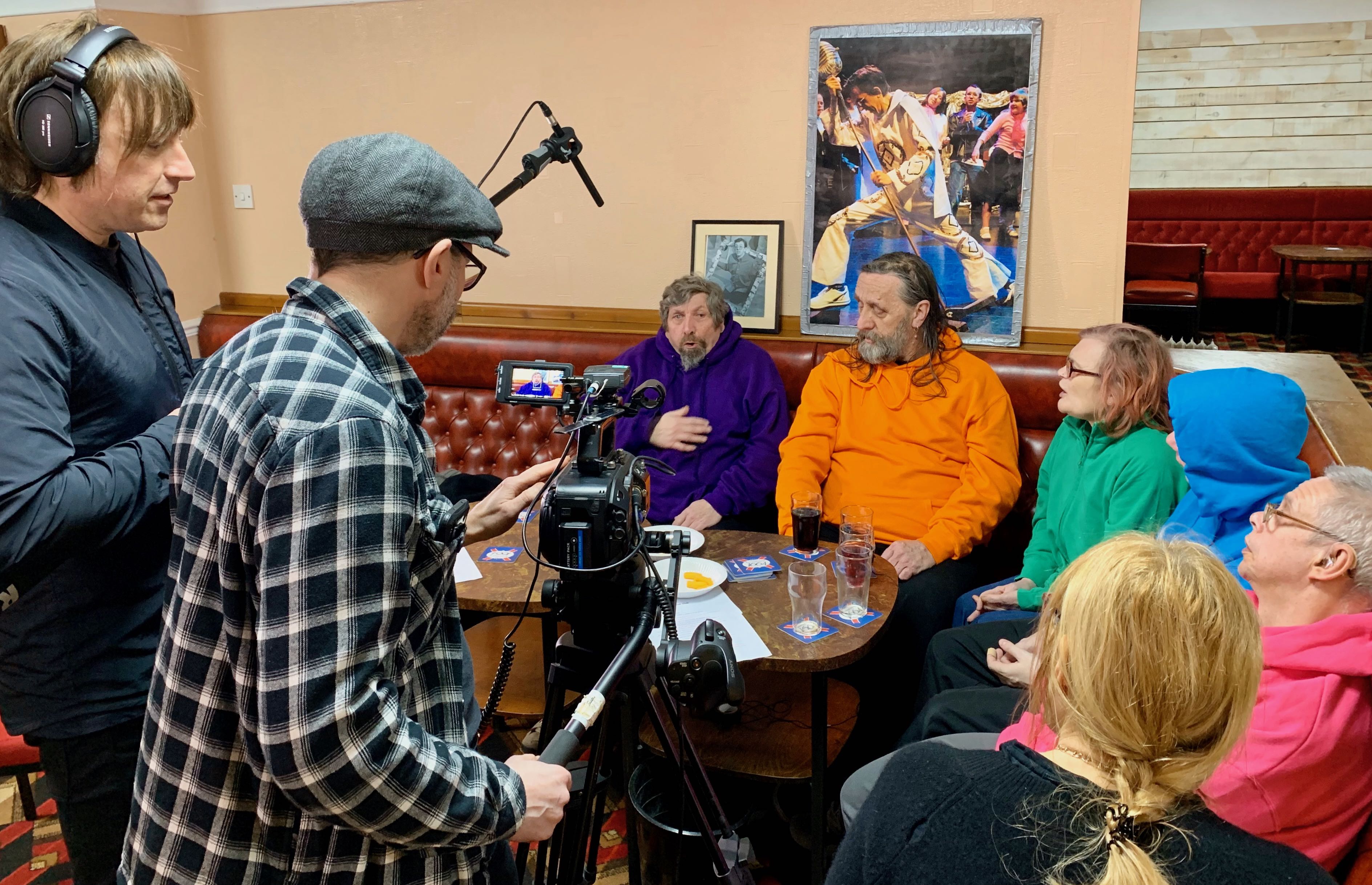
But A Dead Good Life (2020) is much more typical of my work today. The project started with an invitation to work with the Lawnmowers, a theatre company of people with learning disabilities I’ve known for many years. They wanted to do something about getting older and death: some of the company are among the first generation of people with learning difficulties facing this reality. We began expecting to make a piece of theatre, but without a story or even an idea. We worked on Saturdays, once a month, just exploring the questions that concerned them.
The story emerged slowly over half a year and then, as it developed, it became clear that we’d be better making a film than a play. So that is what happened and you can see the result here. Because I’m not a film-maker, we had to raise more money to hire someone who could help us make the film. I contributed ideas to the project, but no more than anyone else. The true genesis was in a process of co-creation that responded to need and interest.
If there’s a conclusion to this it might be my belief that ideas – about which the artworld can be so precious – are ten a penny. They’re everywhere, ready to be plucked from the air. They grow naturally from situations and needs. You should never fear the possibility of not having an idea. The problems come from choosing weak or derivative ideas, and from pushing existing ideas onto people and situations that don’t own them.
And the best antidote to that is listening, creative listening so that you hear not only what is being said but why, and what is not being said and why. The genesis of ideas is there – in conversations between people and then the practical, physical creative work that tests ideas and leads to their strengthening or redirection. My shorthand for that is ‘the process’ but I think that word is probably opaque to people who’ve not been part of a co-creation project. I’m starting to think that it might be useful to write something about the process itself.

 François Matarasso